
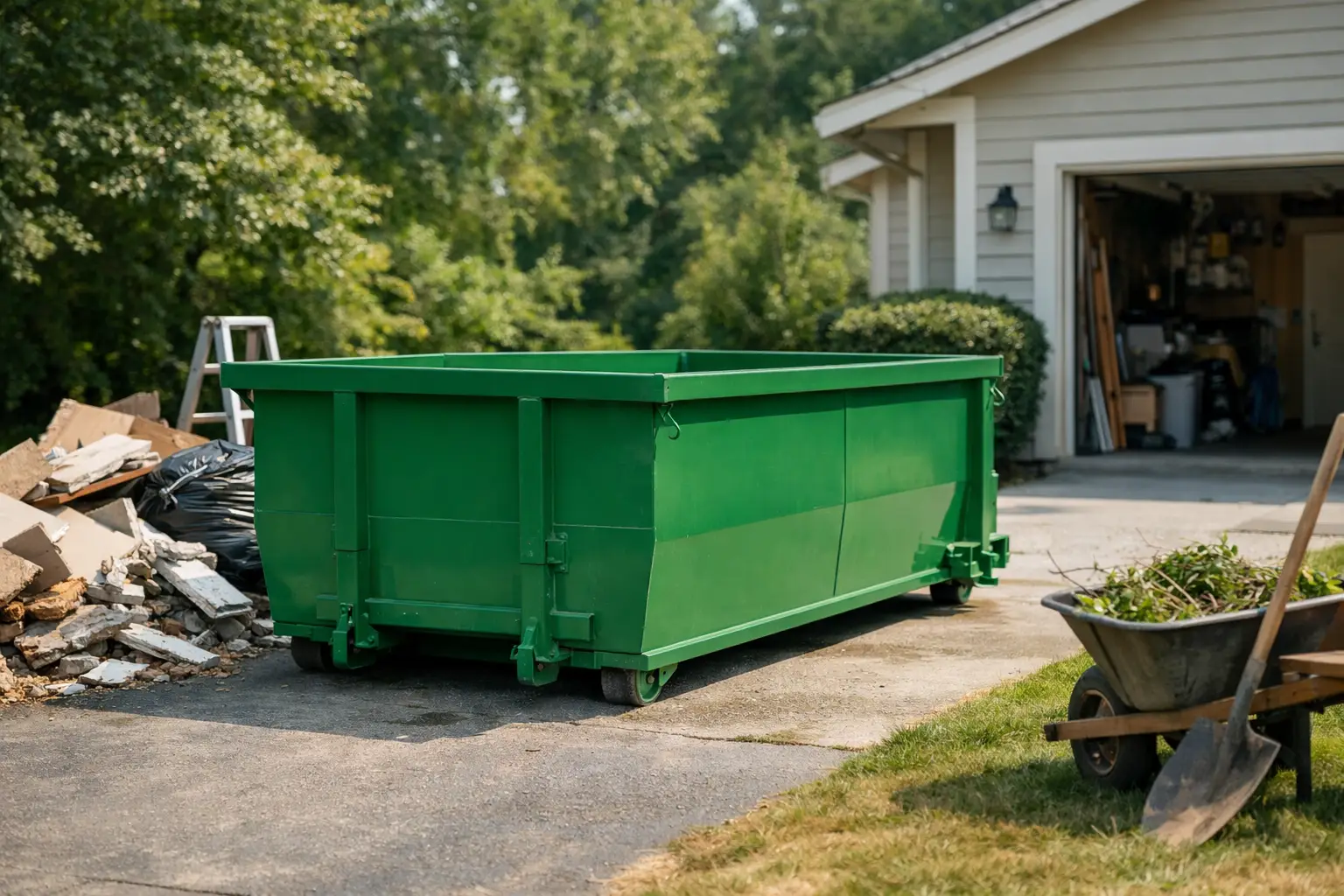
That pile in the garage has a way of growing legs. Add a bathroom tear-out, a few busted shelves, old carpet, and the leftovers from a weekend project, and suddenly your pickup bed is not going to cut it. A 10 yard dumpster gives you a real place to put the mess without turning your driveway into a long-term sorting station.
It is the smallest common roll-off size, but “small” does not mean useless. For the right project, it is the sweet spot: enough capacity to make serious progress, a footprint that works for many residential driveways, and less empty space to pay for than a larger bin. The trick is knowing what your debris weighs, how much room it takes up, and whether your project has a habit of expanding once you start opening closets.
What Fits in a 10 Yard Dumpster?
A 10-yard bin holds about 10 cubic yards of material. In plain English, that is roughly the volume of 30 standard 33-gallon trash bags, depending on how tightly they are packed and what is inside them. Dimensions vary by container and truck, but many 10-yard dumpsters are around 12 feet long, 8 feet wide, and 3.5 feet high.
That low wall matters. You do not need to heave every bag over the side like you are training for a strongman event. Most roll-off containers have a walk-in door, too, so bulky items can go in at ground level. Load the heavy stuff first, spread it across the floor, then stack lighter debris on top.
A 10-yard dumpster is usually a good fit for a single-room cleanout, a garage purge, a small deck removal, flooring from a modest room, or debris from a bathroom renovation. It can also handle an attic cleanout, a shed clear-out, or the aftermath of finally dealing with the basement storage that has not been touched since the flip-phone era.
When a 10 Yard Dumpster Is the Right Call
The best projects for this size are contained projects. You know where the mess begins and ends. You are clearing one room, tackling one repair, or working through a defined pile rather than emptying an entire house.
Small remodels and tear-outs
A bathroom remodel creates more debris than most people expect. Old vanity, drywall, tile, flooring, fixtures, packaging, and trim add up fast. A 10-yard dumpster often works well for a small bathroom, especially when the job does not involve large amounts of concrete, brick, or other dense material.
The same goes for a kitchen refresh that is more cosmetic than full demolition. Cabinets, countertop pieces, drywall, and old flooring may fit comfortably. But if you are gutting a large kitchen, removing multiple layers of flooring, or tearing out walls, stepping up to a 15- or 20-yard bin can save you from running out of room halfway through.
Garage, basement, and attic cleanouts
For household clutter, volume is usually the issue rather than weight. A 10-yard bin gives you enough room to toss broken furniture, cardboard, worn-out toys, old shelving, bagged junk, and the mystery boxes you have moved three times without opening.
Start with a realistic look at what is staying. If the cleanout covers one crowded garage bay or a basement room, 10 yards may be right on target. If you are clearing a whole-home estate, several bedrooms, or years of accumulated belongings in multiple areas, a larger container is more practical.
Yard debris and small outdoor projects
Branches, brush, old fence sections, landscape timbers, and small amounts of sod can fill a bin quickly because they are awkward and airy. Cut branches down when possible and lay them lengthwise to avoid creating a tangled, hollow pile.
A 10-yard container can work for a modest yard cleanup or a short fence replacement. It is less ideal for major tree work, a large deck, or a full landscaping overhaul. Those jobs tend to produce bulky material long before the container looks full.
The Big Trade-Off: Volume vs. Weight
Dumpster size measures volume, not magic. Ten cubic yards of old clothes and cardboard is one thing. Ten cubic yards of wet drywall, roofing shingles, dirt, concrete, or brick is another.
Heavy materials can hit a weight limit before a dumpster reaches the top edge. That does not make a 10-yard bin the wrong choice - in fact, smaller bins are often the safer choice for dense debris because they help prevent overloading. It does mean you should describe the material clearly when requesting a quote.
If your project includes concrete, dirt, brick, asphalt, shingles, or large amounts of tile, do not bury that detail. Disposal rules and allowable weight can change based on what is going in the container. A straight answer upfront helps prevent surprise charges and makes sure the truck can haul the load safely.
Keep all debris below the top rim. A container piled above its rails cannot be safely covered and transported. If the bin is full, it is full. Pressing down on a mountain of debris with your hands is not a loading strategy.
How to Make 10 Yards Go Further
A little loading discipline can make a noticeable difference. Put flat materials such as plywood, drywall, doors, and broken-down cardboard along the sides or bottom. Break down furniture when it makes sense. Bag loose, light debris so it does not scatter across the container or your yard.
Avoid tossing in large items first just because they are annoying. An old couch or mattress can consume a surprising amount of airspace. Load dense, stackable materials first, then fit odd-shaped items around them. Think of it as driveway Tetris, except the prize is getting your space back.
Before delivery, clear a route for the truck and choose a level, accessible drop-off spot. Move vehicles, basketball hoops, and anything else that could make placement harder. If you are concerned about the driveway surface, ask about putting boards beneath the container. The right setup depends on the driveway and the weight of the loaded bin.
What Should Stay Out of the Dumpster
Most everyday construction debris and household junk are fair game, but certain materials need separate handling. Do not toss in hazardous chemicals, paint, fuels, propane tanks, batteries, tires, medical waste, or anything containing asbestos unless you have confirmed the provider’s rules first.
Electronics, appliances, and mattresses may also have specific disposal requirements depending on the item and local facility rules. When in doubt, ask before loading. It is much easier to set an item aside than to unload a container after the fact.
Should You Rent a Dumpster or Book a Haul?
A dumpster is built for the DIY timeline. You sort, lift, demo, and load when you have the time. That is a solid choice for a multi-day cleanup, a renovation with stop-and-start work, or a project where you expect debris to appear in stages.
Full-service junk removal makes more sense when the pile is ready now and you do not want to do the lifting. If the job involves heavy furniture, a tight deadline, or a long list of things you would rather never carry again, having a crew load it can be worth it.
For Bowling Green and Northwest Ohio projects, Bye-Bye Buckeye keeps the choice simple: you fill the roll-off on your schedule, then it gets hauled away. No repeated dump runs. No borrowed trailer. No trying to explain why the back of your pickup is riding suspiciously low.
A Quick Size Check Before You Order
Picture every item in the project gathered in one place. If it is one room’s worth of renovation debris, a garage cleanout, or a small outdoor project, a 10-yard bin is often the practical answer. If the pile includes several rooms, bulky furniture throughout the house, or a full-scale demolition, give yourself more capacity.
Going too large can mean paying for space you do not use. Going too small can mean a second container or an overloaded pile sitting beside the first one. The best call comes down to the material, not optimism.
Take five honest minutes to count the rooms, identify the heavy debris, and look for the items still hiding behind the obvious pile. Then pick the bin that lets you load it safely, close the door on the mess, and say bye-bye to it for good.