
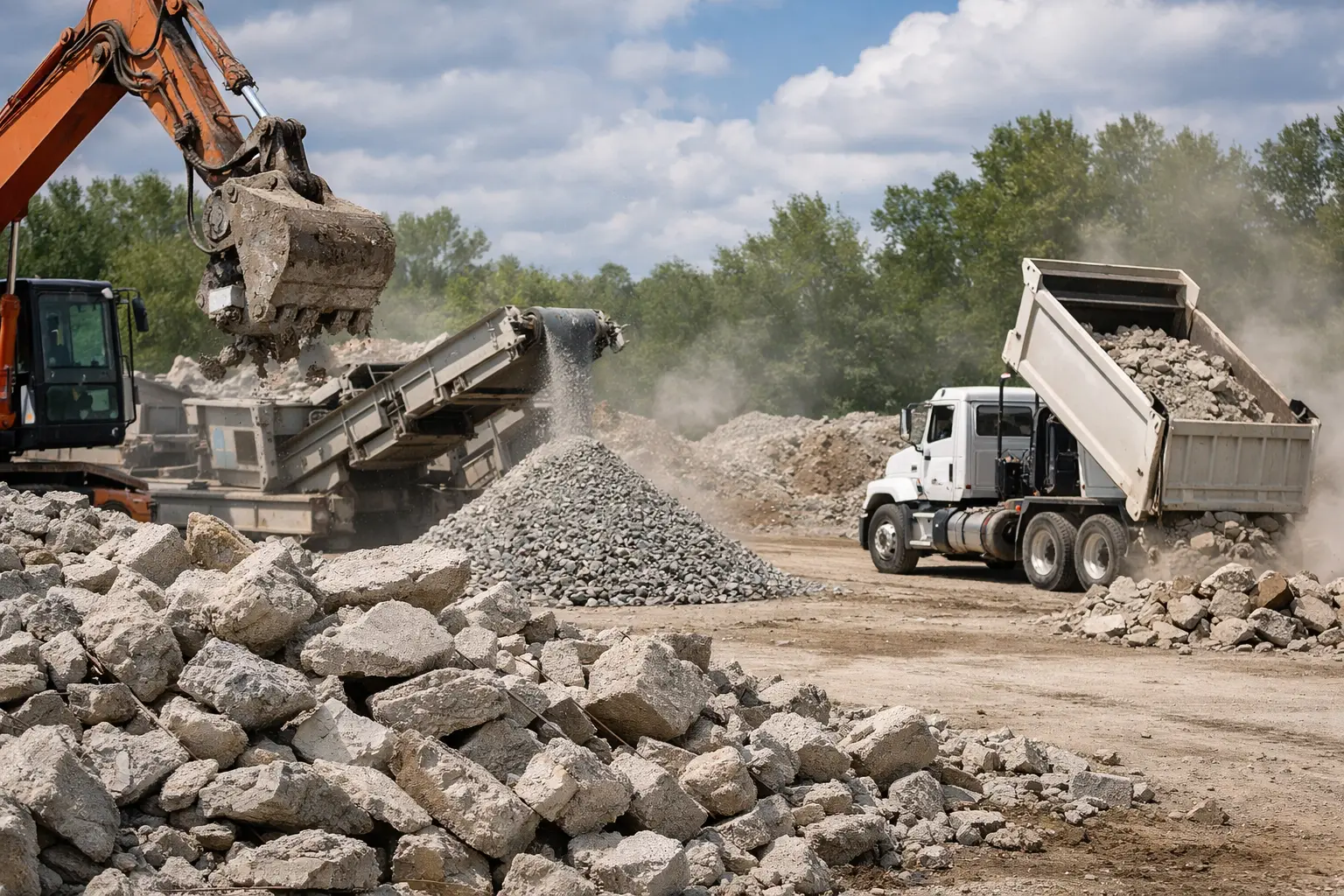
That busted patio or driveway section looks manageable until you pick up the first chunk. Concrete is not regular junk. It is dense, dirty, and surprisingly expensive to move when the plan is wrong. This concrete disposal guide covers the practical decisions that keep a demolition cleanup moving: what to separate, where the material can go, and when a dumpster or haul crew makes more sense.
Why Concrete Disposal Gets Complicated Fast
Concrete takes up less space than household junk, but it weighs far more. A small pile of broken sidewalk slabs can push a pickup truck, trailer, or dumpster past its safe weight limit long before it looks full. That is why concrete jobs are priced and planned around weight, not just volume.
The material also needs a clean stream. Broken concrete that is separated from lumber, trash, insulation, drywall, soil, and plastic may be accepted for crushing and reuse as aggregate. Mix it all together, and it can become mixed construction debris with different disposal rules and costs. A few minutes of sorting at the start can prevent a headache at pickup.
For homeowners around Bowling Green and Northwest Ohio, the right outlet depends on the amount of material, what is mixed into it, and the requirements of the receiving facility. Never assume a general landfill, transfer station, or dumpster can take an unlimited load of concrete. Ask before you load.
Start by Identifying What You Actually Have
Plain, cured concrete is the easy stuff. Think sidewalk, patio, driveway, steps, curb pieces, concrete block, or a small foundation section. Rebar is often workable when it remains embedded in chunks, but long loose steel pieces may need to be separated or cut down for safe handling.
The job changes when the pile includes asphalt, brick, dirt, landscaping fabric, wood forms, or demolition trash. Some facilities accept brick and block with concrete, while others want concrete only. Asphalt is often handled separately. Dirt may be accepted as clean fill only if it is free of roots, debris, and contamination.
Painted, stained, or coated concrete deserves an extra question before disposal. Older coatings and unknown materials may require special handling. If you are tearing out an older structure and suspect hazardous material could be involved, pause before breaking it up or hauling it away. Concrete itself is not usually the concern - what is on it, under it, or mixed into it can be.
Keep Clean Concrete Clean
Make two piles if the job allows it: clean concrete in one area and everything else in another. Pull off loose wood, plastic, trash, carpet, and packaging as you go. Do not use concrete chunks to bury other junk in a dumpster. That does not make the load cleaner. It makes it harder to process and easier to hit an unexpected charge.
If your concrete contains wire mesh or rebar, leave it in manageable pieces. Steel sticking several feet out of a pile creates a loading hazard, damages equipment, and can snag tarps. Break or cut protruding metal only if you have the right tools and know how to use them safely.
The Best Ways to Get Rid of Concrete
There is no single best answer. A couple of blocks from a garden project call for a different plan than a demolished two-car driveway.
Take a Small Load Yourself
For a handful of manageable pieces, self-hauling may be the lowest-cost option. Confirm the facility accepts your exact material, its hours, payment method, and whether the load must be free of debris. Protect the truck bed, distribute weight evenly, and secure the load.
The trade-off is physical effort and vehicle capacity. Concrete can overload a half-ton pickup fast, even when the bed is only partly filled. Check your vehicle payload rating, not just what looks like it will fit. A trailer also has a gross vehicle weight rating that includes the trailer itself, the concrete, and every tool riding along.
Use a Dedicated Concrete or Clean-Fill Service
For a clean, predictable pile, a dedicated recycling or clean-fill outlet can be a smart route. Concrete is commonly crushed into material used beneath roads, driveways, and construction projects. Keeping it separate gives it the best chance of being reused rather than treated as mixed waste.
This option works best when you can load and transport the material safely, or when the provider offers a specific heavy-material container. It may not be convenient for scattered debris or a demolition project that produces multiple waste types.
Book Full-Service Removal
If the pile is already broken up but the thought of lifting it into a truck sounds miserable, let a hauling crew handle the labor. This is especially useful for concrete behind a house, at the bottom of steps, or mixed with other bulky cleanup work.
Be clear about how much concrete is present and where it sits. Weight affects the equipment, crew time, and disposal plan. Photos and a straightforward description help produce a more accurate quote than calling it “a few pieces” when it is really half a patio.
Rent the Right Dumpster for the Job
A roll-off dumpster gives you time to break, sort, and load material at your pace. But concrete is a special case. A large dumpster is not automatically the best choice, because the weight limit can be reached while the container is still mostly empty. Some providers require heavy debris to go into a smaller container or limit how high it can be loaded.
Tell the dumpster company that the load is concrete before delivery. Ask what amount is allowed, whether clean concrete must stay separate, what materials cannot be mixed in, and how overages are calculated. Upfront answers beat a surprise after the truck hits the scale.
How to Load Concrete Without Creating a Bigger Mess
Break slabs into pieces you can control. Smaller chunks are easier to carry, stack, and place in a container, but do not turn every piece into gravel unless a facility requires it. Excessive breaking adds time, noise, dust, and wear on your tools.
Wear eye protection, gloves, sturdy boots, hearing protection when using demolition tools, and a dust mask or respirator appropriate for concrete dust. Silica dust is not something to shrug off. Wetting the work area lightly can reduce airborne dust, but avoid creating muddy runoff or a slick work surface.
Load low and spread the material across the container floor. Do not build one giant mountain at the front or back. Keep concrete below the container’s fill line, and do not leave pieces hanging over the sides. The driver must be able to tarp and transport the load safely.
For driveway protection, ask about placing boards beneath dumpster contact points. This can help distribute pressure, though it does not make a weak or damaged driveway invincible. If access is tight, soft, steep, or newly paved, discuss it before delivery. A better placement plan can save your lawn, curb, and temper.
Common Concrete Disposal Mistakes
The biggest mistake is treating concrete like ordinary trash. It is not. Do not toss it in the curbside bin, leave it on public property, dump it in a ditch, or hide it in the woods. Illegal dumping can lead to fines, cleanup costs, and a mess for someone else to deal with.
Another common misstep is ordering a container based only on cubic yards. Volume matters for couch cushions and cardboard. Concrete is a weight game. A smaller container with a clear concrete allowance may be safer and more affordable than a huge one loaded beyond its limit.
Avoid mixing materials just because they came from the same project. Keep asphalt, dirt, wood, packaging, and household trash separate unless your disposal provider specifically says otherwise. Finally, do not wait until a loaded truck is at the gate to ask whether the facility accepts concrete. Confirm first. Hauling it twice is nobody’s idea of progress.
Questions to Ask Before You Schedule Pickup
A quick conversation can prevent most disposal surprises. Ask whether the facility or service accepts clean concrete, whether rebar, block, brick, or asphalt can be included, and whether there is a minimum or maximum load. If you are renting a dumpster, ask about the included weight, the load height, driveway protection, and fees for extra weight or prohibited materials.
Also describe access honestly. Mention gates, stairs, a backyard location, low branches, narrow drives, or a pile that needs to be broken up first. The more accurate the job details, the better the plan.
Concrete does not have to camp out beside your garage for the next five years. Sort it, respect the weight, and choose a disposal option built for heavy material. When you want the lifting and hauling off your plate, Bye-Bye Buckeye can help you choose a straightforward plan and get that pile moving.