
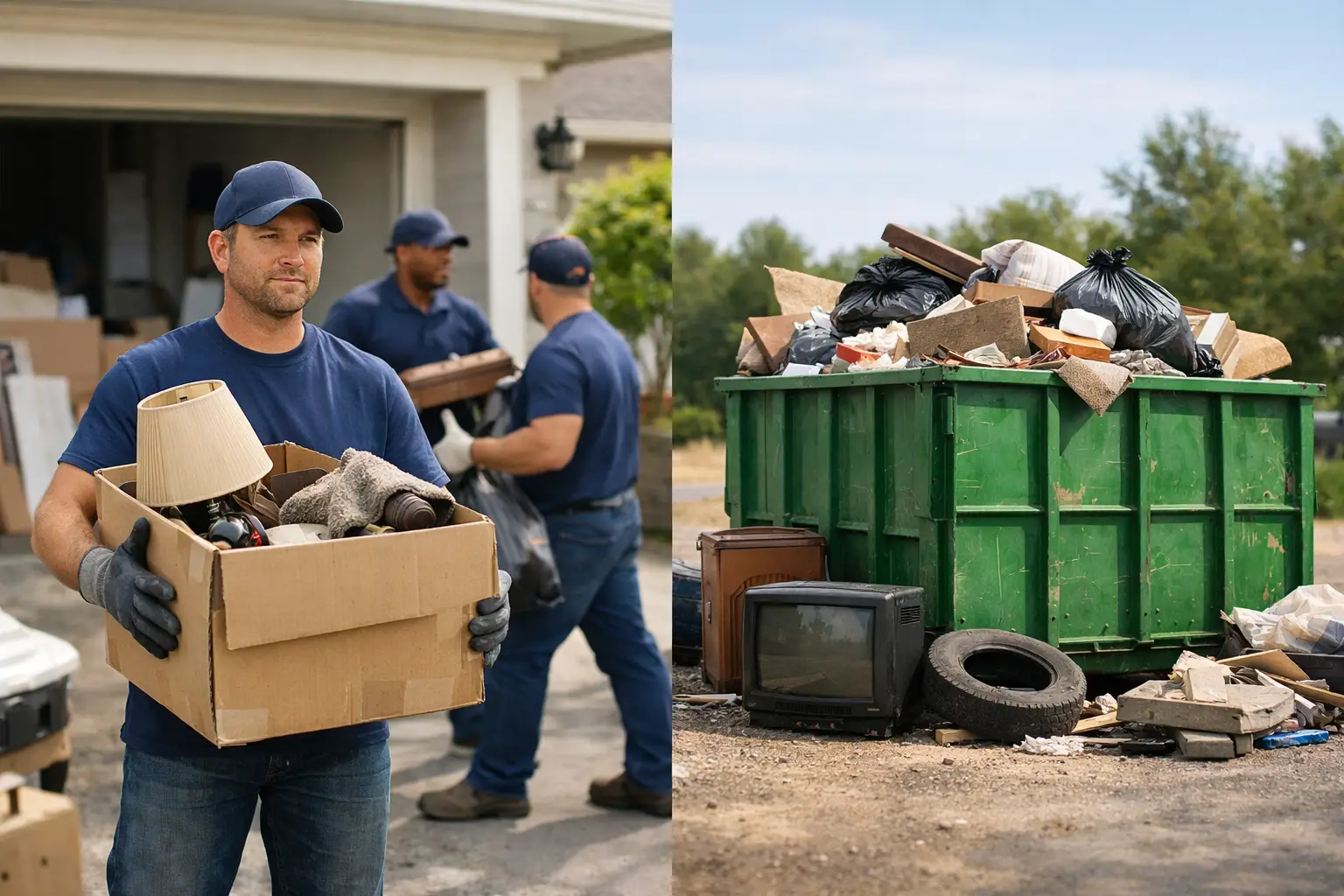
That broken recliner in the basement is not getting lighter. Neither is the pile of moving boxes in the garage, the old fence leaning behind the shed, or the construction scraps taking up half the driveway. Junk removal is for the moment when you are done stepping around the mess and ready to get your space back.
The real question is not whether the stuff needs to go. It is how you want it gone. Some jobs call for a crew that shows up, lifts everything, and hauls it away. Others make more sense with a roll-off dumpster parked in the driveway while you work through the mess on your own schedule. Pick the right lane, and a big cleanup becomes a straightforward job instead of a multi-week headache.
What Junk Removal Can Handle
Most household junk is exactly what it sounds like: bulky, unwanted stuff that will not fit in the regular trash cart or should not be left at the curb. Think worn-out sofas, mattresses, broken appliances, old patio furniture, bagged clutter, carpet, yard debris, and the mystery pile that has lived in the corner of the garage since the last move.
It also covers bigger turning points. Cleaning out a home after a move. Clearing an estate. Tearing out a dated kitchen. Cleaning up after a tenant leaves. Finishing a backyard project before company comes over. These jobs create more than a few bags of trash, and making repeated runs in a pickup can eat an entire weekend fast.
There are limits, because not every item can be tossed in with general debris. Paint, fuels, chemicals, batteries, propane tanks, and other hazardous materials often need specific handling. Refrigerators and certain appliances may have disposal requirements too. When requesting a quote, say what you have - especially if it is heavy, awkward, or questionable. A clear list helps prevent surprises on pickup day.
Full-Service Junk Removal When You Want It Gone Now
Full-service hauling is the move when the job is ready to go and you do not want to do the lifting. You point out the items. The crew handles the carrying, loading, and hauling. That is a big deal when the junk is upstairs, wedged in a basement, soaked from sitting outside, or heavy enough that you should not be wrestling it down a staircase.
This option is often the best fit for a single large item, a garage cleanout, an estate cleanout, or a pile of debris that is already gathered in one place. It is also practical when time matters. If you are closing on a house, wrapping up a renovation, or trying to reclaim a room before family visits, waiting around for a free Saturday may not be the plan.
With a full-service haul, pricing is usually based on how much room the items take up in the truck. That means a few bulky pieces can cost differently than a large stack of flattened boxes, even if both look like a lot at first glance. Ask for upfront pricing and make sure the quote covers loading, hauling, and disposal. The cheapest number is not useful if it leaves out the work you actually need done.
Get the pile ready, not perfect
You do not need to stage a showroom-clean pile for a hauling crew. If it is safe to do so, separating items you plan to keep from items you want removed makes the appointment faster and reduces mix-ups. Clear a walking path through hallways, stairs, and driveways. Move pets somewhere comfortable. Then let the haulers do what you hired them to do.
Do not force a massive dresser through a doorway or try to drag a waterlogged couch down the stairs just to save a few minutes. That is how walls get gouged and backs get hurt. A fully insured crew brings the muscle and knows how to work around tight spaces.
When a Dumpster Is the Better Call
A roll-off dumpster gives you time. It is the better choice when junk is coming out in waves instead of sitting in one finished pile. Maybe you are clearing a whole house room by room, pulling up flooring, replacing a roof, tackling a landscape project, or working through years of garage clutter whenever you have an hour free.
The dumpster sits in your driveway or other approved placement area. You fill it as you go. When the job is done, it gets picked up and hauled away. No trailer to borrow. No dirty truck bed. No repeat trips to a disposal site.
For Bowling Green and Northwest Ohio homeowners, that flexibility matters during renovation season, move-out season, and the inevitable "we are finally doing the garage" weekend. The trade-off is simple: you do the loading. If the material is spread across a property, extremely heavy, or located on another floor, full-service hauling can be worth it for the labor alone.
Choose the size based on the job, not optimism
Dumpster sizes are measured in cubic yards. A 10-yard container can work well for a small cleanout or a compact remodeling project. A 15- or 20-yard size gives more breathing room for flooring, furniture, and larger household cleanouts. A 30-yard dumpster is built for major projects with serious volume.
Going too small can mean needing another container. Going far too large can mean paying for empty air. The smartest way to choose is to describe the project honestly: how many rooms, what materials, and whether bulky furniture is involved. Drywall, shingles, dirt, concrete, and other dense materials can affect what a container can safely carry, even when there is still open space on top.
Before delivery, make room for the truck and choose a level location. Keep cars out of the way, watch for low branches or wires, and consider the path from the work area to the dumpster. A container at the far end of the property can turn every load into an unnecessary workout.
Crew or Dumpster? Make the Call in 60 Seconds
Start with your timeline. If everything is ready now and you want zero lifting, book a full-service haul. If you will be sorting, demoing, or cleaning over several days, a dumpster gives you the breathing room to work at your pace.
Then look at the labor. A crew is the clear winner for an old sectional, a basement full of furniture, or a pile that requires carrying items down stairs. A dumpster works well when the debris is lightweight enough to load safely and you have people already handling the project.
Finally, consider volume. One truck load of finished junk is a hauling job. A whole-house purge or ongoing renovation often needs a dumpster. There is overlap, and that is fine. If you are unsure, a quick description of the mess should be enough for a reputable provider to steer you toward the practical option instead of the biggest ticket.
Avoid the Cleanup Mistakes That Cost You Time
The fastest way to make junk removal harder is to wait until the pile has become a safety hazard. Broken furniture, loose nails, unstable stacks, and blocked exits are not just ugly. They make the cleanup slower and more dangerous.
Do a quick first pass before the removal date. Pull out personal paperwork, keys, medications, keepsakes, and anything that could have slipped into a drawer or box. Open old cabinets and nightstands. Check pockets in coats and purses. Once an item is loaded, it may be gone for good.
Also resist the urge to overfill a dumpster. Material should stay below the top edge so it can be safely covered and transported. If you reach the fill line before the project is over, do not build a trash mountain on the driveway. Call and sort out the next step.
Clear the Space, Then Use It
Junk removal is not really about trash. It is about getting a garage that fits a car again, a spare room that is usable again, or a property ready for what comes next. Bye-Bye Buckeye keeps it simple: choose a crew when you want the lifting handled, or choose a dumpster when your project needs time.
Start with the item that has been bothering you the longest. Once that first piece is out the door, the rest of the cleanup usually gets a whole lot easier.