
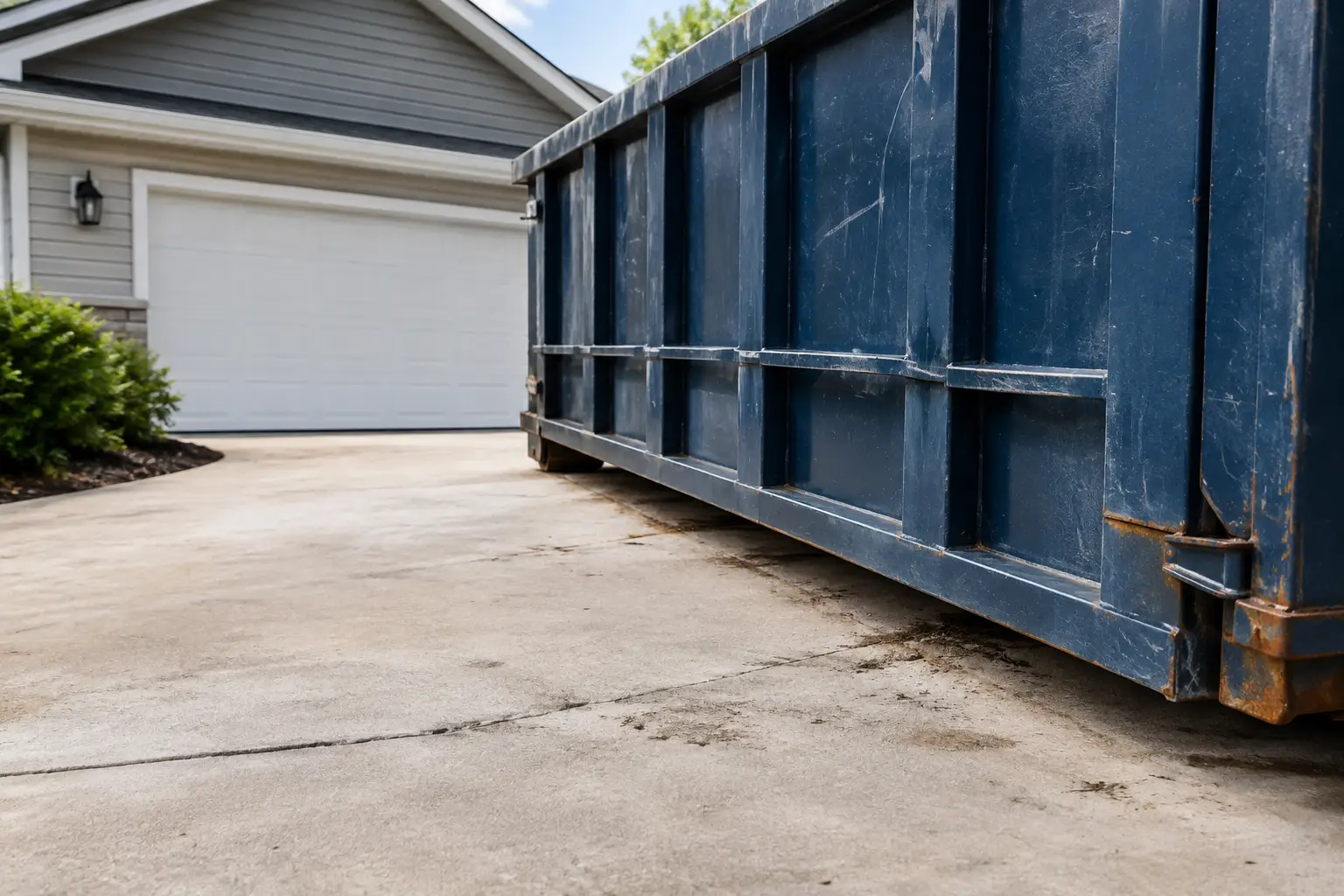
A roll-off dumpster makes a garage cleanout, roofing job, or renovation a whole lot easier. But when it is your driveway underneath that steel box, the obvious question is: do dumpsters damage driveways?
They can, but damage is not automatic. A properly placed dumpster on a sound driveway is often uneventful. Trouble usually comes from a mix of factors: an already weakened surface, too much concentrated weight, rough placement, poor protection, or a load that gets heavier than anyone expected.
The good news is that a few smart decisions before delivery can dramatically lower the risk. Here is what actually matters before you drop it, fill it, and haul it away.
Can a Dumpster Damage a Driveway?
Yes. Roll-off dumpsters are heavy before a single bag of debris goes inside. Once loaded with shingles, drywall, old flooring, concrete, dirt, or household junk, the weight can climb quickly. The dumpster's metal rails rest along the driveway, concentrating that force into relatively narrow contact points.
Concrete and asphalt handle weight differently. Concrete is rigid and generally strong under downward pressure, but it can crack if it already has weak spots, poor base support, or significant age-related wear. Asphalt has more flex, especially during warm weather, but it can indent, scuff, or rut under a heavy container.
That does not mean your driveway is doomed the moment a dumpster truck arrives. A newer, well-built concrete driveway may handle a typical home cleanout just fine with boards underneath. An older asphalt drive baking in July, loaded with dense construction debris, deserves a more cautious plan.
What Causes Driveway Damage From Dumpsters?
The container gets blamed, but the real cause is usually more specific. Understanding the pressure points helps you avoid them.
Existing cracks and weak areas
A small crack is not always a dealbreaker. Still, a dumpster can turn a minor flaw into a bigger repair if the driveway has settled, crumbled at the edges, or developed spiderweb cracking. Water that has worked below the slab or asphalt can weaken the base beneath the surface, too.
Walk the driveway before scheduling delivery. Pay particular attention to old patched areas, slab joints, edges, and spots where vehicles have already left depressions. If you see major cracking or sinking, ask about placing the dumpster elsewhere.
Dense, heavy debris
Ten yards of household clutter does not weigh the same as ten yards of concrete, shingles, soil, brick, or wet drywall. Heavy materials raise the risk for both the driveway and the hauling truck.
This is where choosing the right dumpster size matters. Bigger is not always safer if it encourages you to fill it with dense material. For heavy debris, a smaller container or a plan for limited fill levels can be the better call. Be upfront about what you are tossing so the rental provider can recommend the right setup.
Heat, moisture, and Ohio weather
Asphalt softens in hot weather. A loaded dumpster sitting in direct summer sun can leave depressions that may not fully rebound. Fresh asphalt is particularly vulnerable and should not be treated like a cured, established surface.
Concrete has its own weather concerns. Freeze-thaw cycles common around Bowling Green and Northwest Ohio can worsen existing cracks. Spring thaw can also leave soil and driveway bases softer than they look. If the ground along the drive is saturated, the truck itself may have less stable room to maneuver.
Placement and pickup technique
Damage can occur during delivery or removal, not just while the dumpster is sitting still. Roll-off dumpsters are loaded and unloaded using a cable or hook-lift system. The driver needs enough clear, level space to set it down gently and retrieve it without dragging the container across the surface.
A clear path helps. Move vehicles, basketball hoops, trailers, and low-hanging branches before arrival. Tell the driver where you want the container, then let them assess the safest exact placement based on the site and truck access.
How to Protect Your Driveway Before Dumpster Delivery
The simplest protection is also the most effective: place the dumpster on sturdy wood boards. The boards spread the load across a wider area and keep the steel rails from sitting directly against concrete or asphalt.
Use solid, flat lumber that is long enough to support the rails, not thin scraps or warped pieces from the garage. Two long runs of boards are common because they align with the dumpster's contact rails. The exact board size and arrangement depend on the container and driveway, so confirm what the delivery crew recommends.
Plywood alone is usually not the best choice. It can flex, split, or crush under concentrated weight, especially if it gets wet. Thick lumber is designed to carry a load more effectively.
If your driveway is narrow, sloped, cracked, freshly paved, or made from pavers, discuss the location before delivery day. A level portion of the drive is ideal. In some cases, a firm gravel area or another approved placement location may be a better option than taking chances on a vulnerable surface.
Do not put a dumpster on grass just to keep it off the driveway without thinking it through. Heavy containers can sink, create deep ruts, kill turf, or get stuck in soft ground. A driveway with proper boards is often the safer choice.
Concrete vs. Asphalt: Which Is More at Risk?
Both can be protected, but asphalt generally needs more caution. It is softer, more heat-sensitive, and easier to mark under sustained weight. If your asphalt driveway is new, wait until it has fully cured according to the installer’s guidance before placing anything heavy on it.
Concrete is less likely to dent, but it is not immune to cracking or surface chipping. Decorative concrete, stamped concrete, pavers, and thin residential slabs need special care. Boards help reduce direct pressure, but they cannot fix a driveway with an unstable base underneath.
For either surface, avoid overloading the dumpster and keep the container from sitting longer than your project needs. A container that is filled efficiently and picked up on schedule puts less stress on the driveway than one that becomes a long-term holding pen for every heavy thing on the property.
Choose the Right Dumpster for the Job
A too-large dumpster can be harder to place in a tight drive. A too-small one can lead to overflow, extra loads, or the temptation to pack it with very dense material. The right size balances your project volume, material type, available space, and driveway condition.
For a typical garage or attic cleanout, a smaller roll-off may be plenty. Larger remodeling, estate cleanouts, and roofing jobs can require more capacity, but the contents matter as much as the cubic-yard size. Roofing shingles, for example, add weight fast. Concrete and dirt often require special loading limits.
At Bye-Bye Buckeye, it pays to describe the job plainly: what you are removing, how much you expect, whether the driveway is concrete or asphalt, and any cracks, slope, or tight access. That gives the crew a chance to help you make a sensible plan before the truck is in your driveway.
A Quick Driveway Check Before You Rent
Before delivery, take five minutes to look for conditions that call for extra care:
- Wide or spreading cracks, crumbling edges, sunken sections, or loose pavers
- Newly poured concrete or fresh asphalt that has not fully cured
- A steep slope, tight turning area, or low branches and utility lines
- Soft ground near the driveway where the truck may need to maneuver
- Heavy materials such as concrete, brick, shingles, soil, or plaster
If one or more of these apply, it does not automatically rule out a dumpster. It means the placement plan should be discussed ahead of time rather than guessed at from the curb.
What to Do After Pickup
Once the dumpster is gone, inspect the driveway while the area is clear. Look for scratches, new cracks, depressions, or shifted boards. Most protected driveways will have little more than some dust or debris to sweep away.
If you notice marks on asphalt during hot weather, give the surface time to cool before assuming the damage is permanent. Minor impressions can lessen as temperatures drop. For fresh surface scuffs on concrete, gentle cleaning may be enough. Avoid aggressive chemicals or pressure washing a driveway that is already deteriorating.
The best time to prevent driveway damage is before the container arrives. Use proper boards, choose a realistic size, disclose heavy materials, and set the dumpster on the strongest practical part of the property. Then you can focus on the satisfying part: filling it up and saying bye-bye to the mess.