
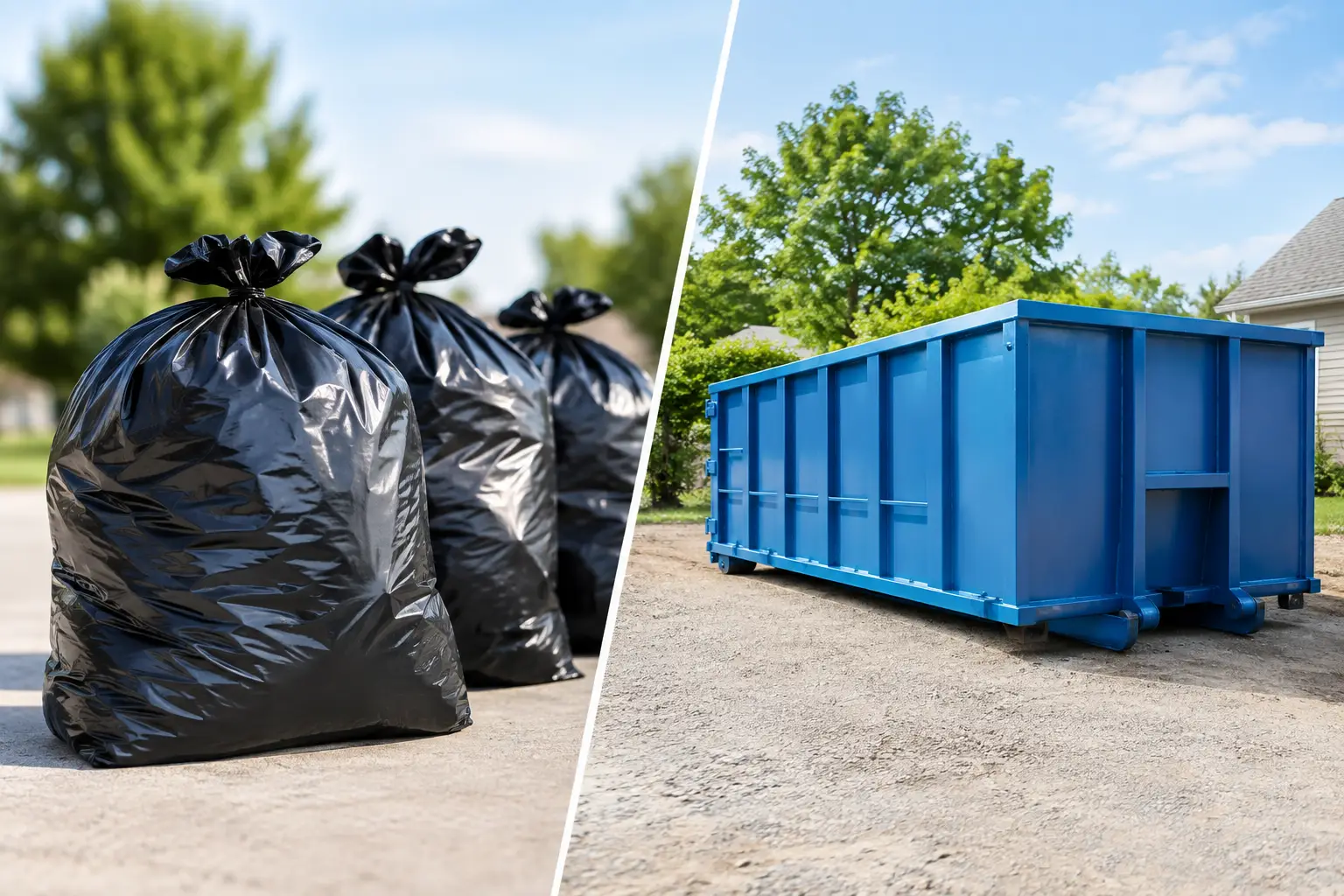
A torn-up bathroom has a funny way of filling a driveway faster than expected. Before the first vanity comes loose or the first bundle of shingles hits the ground, a dumpster bag comparison can save you from buying too little capacity, renting too much, or handling the same pile twice.
Dumpster bags and roll-off dumpsters both get junk out of your life. The difference is how much they hold, where they sit, what they can take, and how much work lands on your shoulders. One is not automatically better. The right call depends on the mess in front of you and the timeline behind it.
Dumpster bag comparison: the quick truth
A dumpster bag is a heavy-duty collection bag you buy, unfold, fill, and schedule for pickup through an available pickup service. It is made for smaller DIY jobs when you have limited debris and do not want a metal container parked in the driveway.
A roll-off dumpster is a steel container delivered by truck, left on-site for your rental period, then hauled away when you are finished. It is built for bigger volumes, heavier materials, and projects that create debris day after day.
Think of a dumpster bag as a pickup truck bed you can fill at your own pace. Think of a roll-off as the right tool when the project has outgrown the pickup-truck stage. If you are tossing a few boxes, old patio furniture, and a small pile of drywall, a bag may be plenty. If you are clearing an estate, replacing a roof, gutting a kitchen, or cleaning a garage that has not seen daylight since 2004, start by looking at a dumpster.
Capacity is where most decisions get made
The biggest trap is judging debris by how it looks before demolition. A room may look modest until insulation, drywall, flooring, cabinets, and packaging turn into a knee-high pile that spreads across half the garage.
Dumpster bags generally suit a limited amount of household debris. They work well when the job has a clear edge: a closet cleanout, a small landscaping project, a few broken furnishings, or leftover materials after a minor repair. They are also handy when you can stage debris in one compact spot and load it carefully.
Roll-off dumpsters come in sizes such as 10, 15, 20, and 30 yards. That range matters because volume adds up fast. A 10-yard dumpster is often a smart fit for dense, contained work like a small bathroom remodel or garage purge. A 15- or 20-yard container gives a household cleanout, flooring replacement, or larger renovation room to breathe. A 30-yard dumpster is for serious volume: major remodels, bulky furniture, construction debris, and big cleanouts.
Do not choose based only on square footage. Material weight matters too. Concrete, brick, dirt, roofing shingles, and wet lumber can get heavy in a hurry. A smaller container may be the better choice for dense debris, while a larger one makes sense for lighter but bulky materials like furniture, cardboard, trim, and old cabinets. Tell the provider what you are throwing away before delivery. That one conversation can prevent a weight surprise later.
Space and access can decide it for you
A dumpster bag takes up far less space before it is filled. You can keep it folded until the job starts, then place it where the pickup equipment can safely reach it. That sounds simple, but access rules matter. The bag must be visible, reachable, and set away from overhead obstructions such as low branches and power lines. A fully loaded bag cannot be dragged across the yard after the fact, so placement comes first.
A roll-off needs a clear driveway or designated placement area, plus room for a delivery truck to maneuver. In Bowling Green and across Northwest Ohio, that can mean moving vehicles, checking low-hanging branches, and thinking about where the container door will open. The walk-in door is a major advantage for heavy items. Instead of lifting an old water heater, dresser, or stack of drywall over the side, you can walk it in.
If driveway protection is a concern, ask about placing boards beneath the container. It will not solve every surface issue, but it can help distribute contact points. The practical move is to clear the spot before the truck arrives rather than trying to rearrange cars and lawn equipment while it waits.
Price is more than the sticker number
A dumpster bag can look like the cheapest option because the bag itself costs less upfront. But the total usually includes a separate collection fee, and pricing may change based on location, debris type, or weight. Make sure you know the complete cost before you fill it. A bargain bag is not a bargain if it cannot hold the project’s debris or cannot be picked up from where you placed it.
Roll-off pricing is usually easier to plan around when it is quoted upfront. Ask what the rental includes, how long you can keep the container, what weight is included, and what materials are restricted. A larger dumpster costs more than a smaller one, of course, but ordering too small can cost more when it leads to a second container or a pile left behind.
The cheapest option is often the one that avoids extra trips, extra labor, and a second round of disposal. If you own a truck and have time to make several landfill runs, the math may lean one way. If the project is already eating weekends, a dumpster can buy back a lot of time.
What are you actually throwing away?
This is where a clean dumpster bag comparison gets less tidy. Both options have material rules. Hazardous waste, chemicals, paint, propane tanks, batteries, tires, and certain appliances commonly require special handling. Do not assume that “junk” means everything can go in the same container.
For ordinary household debris, furniture, wood, drywall, and renovation waste, a roll-off is usually the more forgiving choice because it has the capacity to handle mixed loads. Still, there can be limits on heavy materials and items containing refrigerants. When in doubt, describe the load before booking. A straight answer upfront beats unloading prohibited items later.
Yard debris deserves its own thought. Branches and brush are light but awkward, so they can consume more container space than expected. Soil and landscaping stone are heavy, which may call for a smaller, dedicated load. Mixing every kind of debris into one container is convenient, but separate disposal can sometimes make more sense for unusually heavy or restricted material.
Your timeline matters as much as the pile
Dumpster bags are good for slow, small projects. You can buy one ahead of time, keep it tucked away, and fill it when the weather and schedule cooperate. That flexibility is useful if you are sorting a storage room one box at a time or doing small repairs between workdays.
A roll-off works better when the work has momentum. Contractors, remodelers, and homeowners tackling a full cleanout need somewhere to throw debris now, not after it has collected in the garage. With a dumpster in the driveway, demolition stays contained and the work area stays clearer.
There is a trade-off. A container on-site is convenient, but it occupies part of the driveway. If parking is tight, plan the rental around the most debris-heavy days rather than letting it sit longer than necessary. On the other hand, rushing through a cleanout just because pickup is coming can lead to bad keep-or-toss decisions. Match the rental period to the actual pace of the job.
When to choose each option
Choose a dumpster bag when the debris is limited, mostly lightweight, and easy to carry; you have a pickup-accessible spot; and you are working through a modest project over time. It is the compact option for a compact mess.
Choose a roll-off dumpster when the debris is bulky, heavy, ongoing, or simply too much to estimate with confidence. It is especially useful for renovations, estate cleanouts, roofing jobs, move-outs, and any project where repeated disposal runs would slow everything down.
If the pile is already bigger than the trunk of your car and still growing, do not try to win a weekend-long battle with a small bag. Bye-Bye Buckeye offers 10-, 15-, 20-, and 30-yard roll-off dumpsters for the jobs that need real room. Pick the container that gives the mess somewhere to go, then get back to the part of the project that actually matters.