
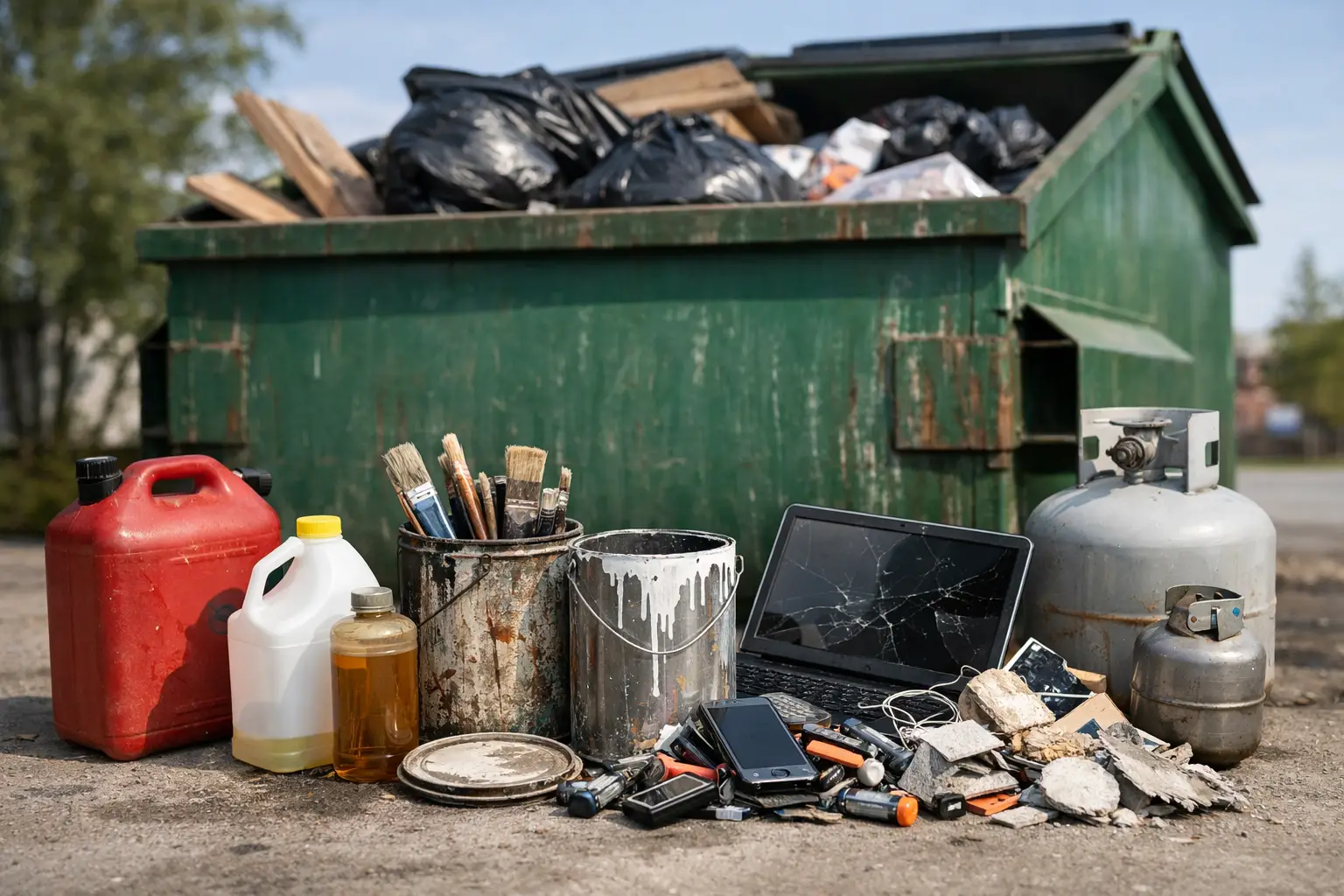
A roll-off dumpster can make a garage cleanout, kitchen demo, or roofing job feel a whole lot less chaotic. But it is not a giant catch-all bin. Dumpster prohibited materials are the things that can turn an easy pickup into a rejected load, a disposal delay, or an extra charge nobody wanted.
The rule is simple: if it can leak, ignite, explode, contaminate a landfill, or requires special handling, keep it out until you have a separate disposal plan. The details matter, though. A half-used paint can is different from a dry, empty one. A refrigerator looks like ordinary junk until you remember what is inside it. Here is how to sort the stuff that does not belong in a standard roll-off before it becomes a problem.
Why Dumpster Prohibited Materials Exist
Disposal rules are not there to make a cleanout harder. They protect the people loading, hauling, and sorting the material, along with the landfill, groundwater, and air around it. A dumpster gets lifted, tilted, compacted, transported, and sometimes sorted by hand. A loose propane cylinder, leaking battery, or can of solvent can become dangerous fast.
There is also a practical side. Landfills and transfer stations have their own acceptance rules, and a dumpster company has to follow them. If prohibited material is found in a load, the facility may refuse it. That can mean the dumpster has to come back, the item has to be removed, and the job takes longer than it should.
Policies can vary by facility and material. When an item is questionable, asking before you toss it is a lot easier than finding out after the dumpster is full.
Materials That Usually Cannot Go in a Roll-Off Dumpster
The following categories are the usual no-go items for standard dumpster rentals. This is the pile to separate before demolition day or before you start clearing that long-neglected shed.
- Hazardous liquids and chemicals: gasoline, diesel fuel, kerosene, motor oil, antifreeze, solvents, pesticides, herbicides, pool chemicals, and unknown liquids all need specialized handling. Never pour them into a dumpster, a drain, or onto the ground.
- Paints, stains, and related products: wet paint, stain, varnish, lacquer, paint thinner, and stripper are common cleanout leftovers. Their disposal depends on the product and whether it has fully dried, so do not assume every can belongs in the bin.
- Batteries and electronics: car batteries, lithium-ion batteries, rechargeable tool batteries, phones, computers, televisions, monitors, and similar electronics may contain heavy metals or pose a fire risk when crushed.
- Pressurized, flammable, or explosive items: propane tanks, helium cylinders, aerosol cans that still contain product, fire extinguishers, fireworks, ammunition, and explosives stay out. Even an apparently empty cylinder can retain pressure.
- Appliances and equipment with regulated components: refrigerators, freezers, air conditioners, dehumidifiers, and some other cooling appliances may contain refrigerant. Fuel-powered equipment can also be an issue if fuel or oil remains inside.
- Medical and biological waste: needles, syringes, medications, oxygen tanks, and anything contaminated with bodily fluids need a proper collection route. Bagging them does not make them safe for a roll-off.
- Potentially contaminated construction material: asbestos-containing material, lead-contaminated debris, and certain industrial materials require assessment and controlled disposal. If you are working in an older building and are not sure what the material is, stop before breaking it apart.
That may sound like a long list, but most household and construction clutter is still fair game. Old furniture, cabinets, drywall, lumber, flooring, cardboard, general household junk, and ordinary renovation debris are typically what a roll-off is built to handle.
The Items That Cause the Most Confusion
Some things live in the gray area because their condition changes the answer. A little prep and one quick question can keep them from becoming a pickup-day surprise.
Paint is not always handled the same way
Wet paint is generally treated as a restricted liquid. If a can of latex paint is nearly empty, it may be possible to let it dry completely using an approved paint hardener or absorbent material, then dispose of the solid material according to the dumpster provider's rules. Oil-based paint and products containing solvents are a different story and commonly need household hazardous-waste collection.
Do not leave lids off in a garage and hope for the best. Keep products away from children, pets, sparks, and heat while you arrange disposal. If you have multiple mystery cans from a basement shelf, treat them as unknown chemicals rather than guessing.
Tires are often accepted only through a separate program
Tires take up space, trap gases, and can create operational problems at disposal sites. Some facilities accept them for a separate fee or through a designated tire collection process, while others will not accept them in a mixed debris load at all.
The same goes for large quantities. One tire from a broken-down mower is not the same as a stack from a property cleanup. Set tires aside and confirm the plan before the dumpster arrives.
Refrigerators and air conditioners need refrigerant recovery
Cooling appliances cannot simply be tossed in with the scrap metal. Refrigerant has to be professionally removed and documented before the appliance can be recycled or disposed of. Empty the appliance, unplug it, and arrange for the proper service or drop-off route.
A washing machine or dryer may be easier to handle, but it still depends on the unit and local acceptance rules. Anything with a compressor, refrigerant line, fuel, or battery deserves a call first.
Heavy debris may be allowed, but not in unlimited amounts
Concrete, brick, dirt, asphalt, roofing shingles, and plaster are not always prohibited. They are heavy. Very heavy. A dumpster that looks only half full can exceed the safe hauling weight limit when it is packed with masonry or soil.
For a small amount of broken concrete mixed with regular renovation debris, the right container and load plan may work fine. For a driveway tear-out, foundation work, or a full roof replacement, the material may need a dedicated dumpster or a separate agreement. Do not bury dense material under lighter junk and assume the load is fine.
How to Sort Before You Start Loading
The smoothest cleanup jobs begin with a quick walk-through. Look for five trouble spots: shelves in the garage, the workbench, lawn-care supplies, automotive fluids, and old appliances. Those are where restricted items tend to hide.
Make one small "do not load" area away from the dumpster. Put chemical containers upright in a sturdy box or tote, keep batteries dry and protected from metal contact, and store propane cylinders standing upright outdoors in a well-ventilated spot away from flame. Do not place restricted materials beside the dumpster where they can be mistaken for trash by a helper or a well-meaning neighbor.
Then load ordinary debris efficiently. Put bulky, flat items along the bottom and sides, break down boxes, and spread weight across the container. Keep everything below the top rail. Material sticking over the sides is not just awkward - it may not be safe or legal to transport.
What to Do With Restricted Items Instead
The right option depends on what you have and how much of it there is. Household hazardous-waste collection events and local recycling programs are often a good fit for paint, chemicals, batteries, and electronics. Auto parts stores or service shops may accept used motor oil and vehicle batteries. Retailers or recycling programs may take certain rechargeable batteries and electronics.
For propane cylinders, fire extinguishers, refrigerant appliances, and medical sharps, use a program equipped for that exact item. Do not puncture, dismantle, drain, burn, or try to "empty" anything yourself to make it dumpster-friendly. That shortcut can create a safety hazard and may make proper disposal harder.
If you are in Bowling Green or elsewhere in northwest Ohio, collection dates and accepted materials can change by agency and season. Check the specific program's current instructions before making the trip. They may have limits on container size, quantity, residency, or appointment requirements.
Ask Before the Bin Is Full
A smart question at booking can save a messy question at pickup: "I have this item. Can it go in the dumpster?" Describe it plainly, including whether it is empty, dried out, leaking, powered by fuel, or contains a battery or refrigerant.
That goes double for estate cleanouts. Old garages and basements are famous for unmarked cans, antique chemicals, ammunition, and tools with built-in batteries. Separate the unknowns first. The rest of the cleanup can move fast once the risky stuff is out of the way.
Bye-Bye Buckeye is built for the ordinary mess - the couches, cabinets, construction scraps, and household clutter that need to get gone. Keep the restricted stuff on its own track, load the rest with confidence, and your dumpster pickup stays exactly what it should be: haul it, dump it, bye-bye.