
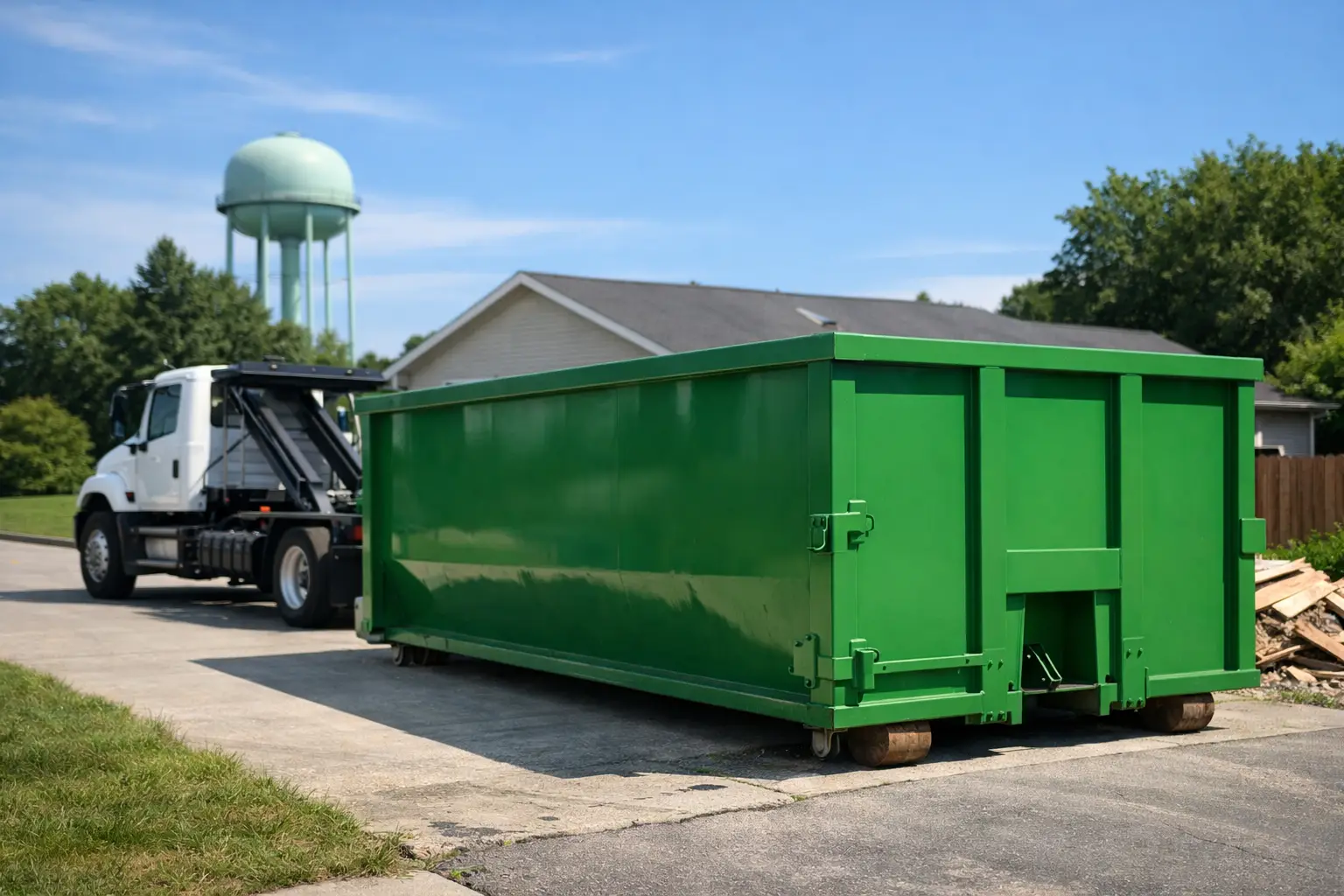
That basement cleanout can look manageable until the first three trash bags turn into an old couch, broken shelving, carpet scraps, and six mystery boxes nobody has opened since 2009. That is when dumpster rental Bowling Green Ohio stops being a nice-to-have and becomes the move that keeps the job moving.
A roll-off dumpster gives you one place for the mess while you work on your own schedule. Fill it during the weekend, after work, or one room at a time. When it is full, it gets hauled away. No pile sitting at the curb. No stuffing a pickup bed for trip number five. No trying to guess whether the hatch will close over that recliner.
When a Roll-Off Dumpster Is the Right Call
A dumpster works best when the junk is coming out in waves. Think garage cleanouts, moving prep, estate cleanouts, roofing tear-offs, remodeling debris, landscaping projects, and the aftermath of finally clearing out a rental. You load as you sort, and the mess leaves once instead of following you around for weeks.
It is especially useful when you already have the hands to do the work. Maybe family is helping clear a relative's house. Maybe a contractor is gutting a bathroom. Maybe you have a Saturday crew of friends who are willing to lift heavy things as long as pizza is involved. A dumpster keeps that labor focused on the job, not on unloading trailers at a disposal site.
There is a trade-off. If you only have a few bulky pieces and do not want to carry them outside, a full-service haul may make more sense. A crew does the lifting and loading. But for a project spread over several days or a large amount of material you can load yourself, a roll-off is usually the better lane.
Dumpster Rental Bowling Green Ohio Starts With Size
The most common mistake is ordering a container based on the size of one item instead of the total volume of the project. A couch may look huge in a living room, but it is only part of a house cleanout. On the flip side, a small bathroom remodel can create surprisingly heavy debris once tile, drywall, flooring, and old fixtures start piling up.
Bye-Bye Buckeye offers 10-, 15-, 20-, and 30-yard roll-off dumpsters. The right choice depends on how much material you have, how bulky it is, and how dense it is.
A 10-yard dumpster keeps small jobs contained
A 10-yard dumpster is a practical pick for a single-room cleanout, a small shed purge, yard debris, or a modest remodeling project. It is often enough when you are getting rid of household clutter, boxes, broken furniture, and light construction materials without emptying an entire home.
This size is also easier to justify when driveway space is tight. Still, do not let a compact footprint trick you into overloading it with concrete, dirt, brick, or roofing material. Heavy material adds up fast.
A 15-yard dumpster handles the in-between jobs
A 15-yard container gives you more breathing room for a larger garage, several rooms of unwanted belongings, flooring removal, or a medium-sized renovation. It is a strong middle option when a 10-yard feels risky but a 20-yard would leave you paying for a lot of unused air.
If your project includes furniture, bagged debris, and construction waste all at once, this is often where the decision lands. The key is to describe the job honestly when requesting a quote. A quick explanation beats choosing blind.
A 20-yard dumpster is built for big clear-outs
A 20-yard dumpster fits projects with real volume: moving cleanouts, multi-room renovations, deck removal, roof replacement debris, and large household purges. It gives bulky items room to settle instead of forcing you to play junk Tetris from the first hour.
For many homeowners, it is the safer choice when the question is, “How much is actually hiding in this house?” If closets, attic space, a basement, and a garage are all on the list, it is usually wiser to have extra capacity than to run out of room on day two.
A 30-yard dumpster is for the serious mess
A 30-yard roll-off is the big gun for major renovations, whole-home cleanouts, large construction jobs, and projects producing a steady stream of debris. It is useful when the work is not just about throwing things away, but removing walls, cabinets, flooring, lumber, and old fixtures along the way.
More space does not mean unlimited weight. Dense materials can hit weight limits long before a dumpster looks full, so discuss concrete, soil, shingles, brick, and similar debris before delivery.
Plan the Drop Spot Before Delivery Day
A dumpster needs a clear, reachable place to land. Your driveway is usually the simplest option, provided there is enough room for the container and the delivery truck to maneuver. Move cars, trailers, basketball hoops, and anything else that could turn a straightforward drop-off into a tight squeeze.
If you are concerned about the driveway surface, put down boards where appropriate before delivery. This can help distribute contact points and reduce the chance of marks on certain surfaces. It is not a magic shield for every driveway, especially if the ground is soft or the load becomes extremely heavy, but it is a smart precaution.
Street placement is a different situation. Some locations may require approval or a permit if the dumpster sits in the public right-of-way. Check local rules before scheduling rather than discovering the issue after the container arrives. The same goes for homeowners association rules, which can be stricter than expected.
Look up, too. Low branches, utility lines, and overhangs can interfere with delivery or pickup. A dumpster needs room above it, not just beside it.
Load It Like You Want It Picked Up
Good loading is less about making the dumpster look pretty and more about using the space safely. Start with flat, heavy items on the bottom. Break down cardboard boxes, dismantle furniture when practical, and fill gaps with smaller debris. This keeps the load stable and makes a smaller dumpster go further.
Keep everything level with the top edge of the container. Material sticking out over the rails can create a safety problem on the road and may prevent pickup until it is rearranged. The same rule applies to loose items that can blow out.
Do not save all the heavy stuff for last. Spread weight across the container. A pile of concrete chunks, wet drywall, or shingles on one end can create a load that is difficult to transport safely. If the project produces heavy material, ask about the best disposal approach before you start loading.
Know What Needs a Different Disposal Plan
Most everyday household junk, furniture, wood, drywall, flooring, general construction debris, and nonhazardous renovation waste can go into a roll-off dumpster. The materials that need extra care are the ones that can create safety, environmental, or disposal problems.
Do not toss in paints, solvents, fuels, chemicals, propane tanks, batteries, tires, medical waste, or other hazardous materials unless you have confirmed they are accepted. Appliances and electronics can also have special disposal requirements. When in doubt, ask before loading it. It is much easier to set one questionable item aside than to sort through a full dumpster later.
What Upfront Pricing Should Actually Tell You
A useful quote is more than one big number. You should understand the dumpster size, included rental period, delivery and pickup expectations, disposal allowance, and what could cause an added charge. The usual surprises come from overfilling, exceeding a weight allowance, keeping the container longer than planned, or loading prohibited materials.
That does not mean every project can be priced the same way. A dumpster full of cardboard weighs very differently from one filled with torn-out tile. Be specific about the debris, especially if it is heavy, and choose a size that matches the real job instead of the optimistic version of it.
A cleanout is already enough work. Make the disposal part simple: choose the right container, clear a good drop spot, load it level, and keep questionable materials out. Then get back to the satisfying part - watching the pile disappear.