
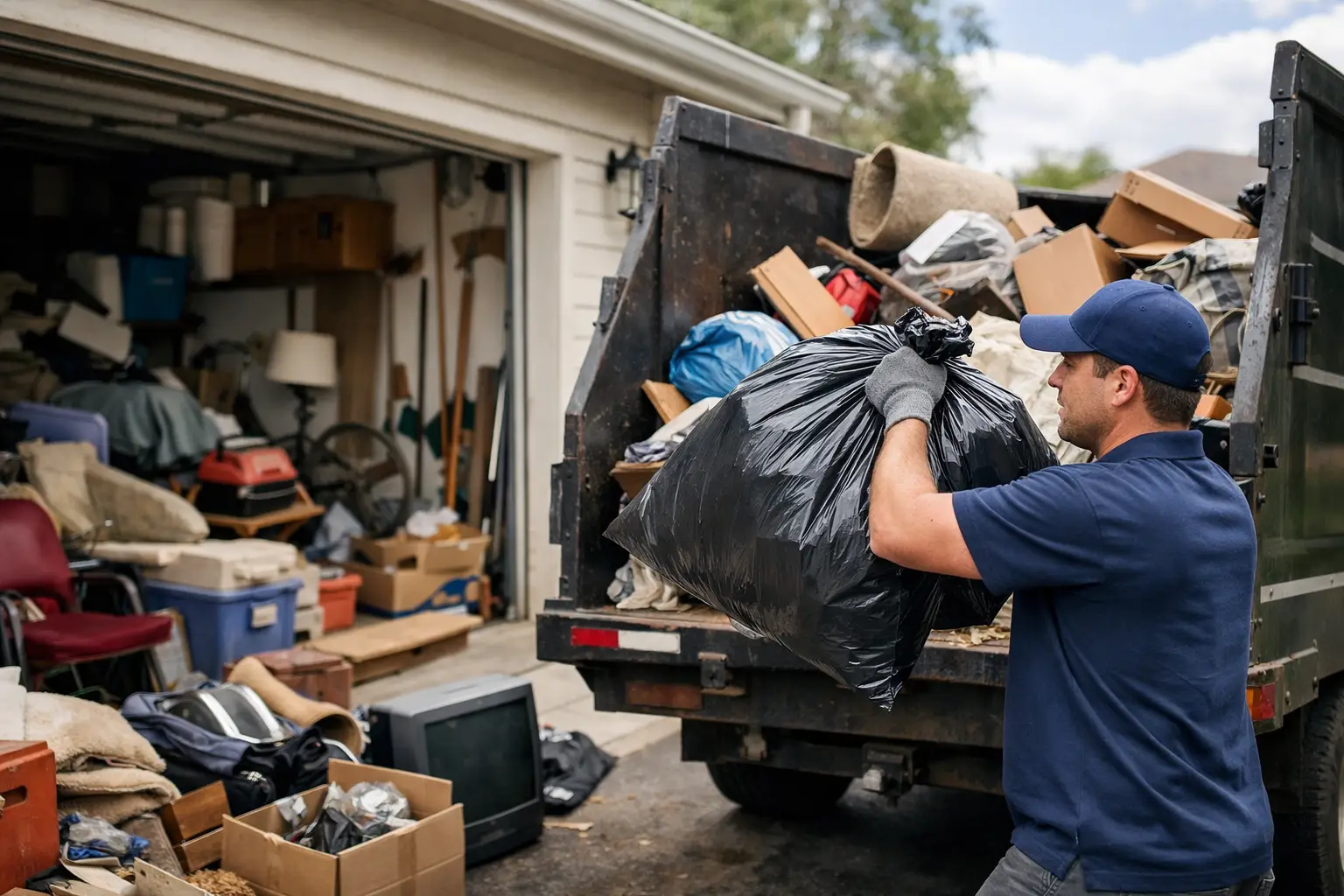
That garage door only opens halfway for a reason. Behind it: the broken patio chairs, mystery boxes from three moves ago, a treadmill that became a coat rack, and enough scrap wood to build absolutely nothing. Garage cleanout junk removal is how you get your floor back without turning one Saturday into a three-week project.
The goal is not to create a picture-perfect showroom. The goal is simpler: clear the stuff that is blocking your car, your tools, your next project, or your peace of mind. Start with a plan, make quick decisions, and pick the removal option that matches the size of the pile.
Start the Garage Cleanout Before You Touch a Box
A cleanout goes faster when you decide where everything is going before the sorting begins. Set up four zones near the driveway or along one clear wall: keep, donate, recycle, and haul away. If you are working in a tight garage, use tarps, bins, or even painter's tape on the floor to mark the zones.
Do not begin by opening every box and reliving every receipt, holiday decoration, and old school project. Start with the obvious stuff first. Broken furniture, empty paint cans, damaged toys, rusted tools, old carpeting, and boxes that have been wet for years are easy calls. Getting those out creates room to make smarter decisions about the things that remain.
Work from the garage door toward the back wall. That gives you a visible win early and keeps you from building a new pile in the exact spot you just cleared. For a big garage, tackle one bay, one shelving unit, or one wall at a time. A finished section beats a garage that is completely torn apart at 6 p.m.
What Usually Belongs in the Haul-Away Pile
Most garage clutter is not one giant item. It is a mixed load of bulky junk, outdated household goods, leftover materials, and random pieces that no longer have a job. That is exactly why a cleanout can feel bigger than it looks from the doorway.
Common haul-away items include old couches and mattresses, worn-out shelving, boxes of damaged belongings, bicycles beyond repair, grills, carpet, lumber scraps, small appliances, exercise equipment, and post-project debris. Yard equipment, cabinets, doors, and busted lawn furniture can also take up a surprising amount of space.
Some items need a separate disposal plan. Chemicals, fuels, paint, propane tanks, batteries, tires, and certain electronics may have special handling rules. Do not bury these at the bottom of a junk pile and hope for the best. Set them aside, identify what is inside, and ask about accepted materials before scheduling a pickup or loading a dumpster.
Also keep an eye out for anything personal. Paperwork, photo albums, keys, jewelry, and spare cash have all been found in garage boxes. Give each container a quick check before it goes out. Thirty seconds is cheaper than replacing a title, a family photo, or the one key to the boat trailer.
Make Faster Keep-or-Go Decisions
The garage is where "maybe someday" goes to collect dust. That does not mean every stored item is useless, but it does mean you need a standard stronger than guilt.
Ask three questions: Have I used this in the last year? Would I buy it again today? Does it have a specific place to live after this cleanout? If the answer is no across the board, it is probably taking up room that you need more.
Seasonal items are the exception. Snow shovels, holiday bins, camping gear, and tools may only come out a few times a year, but they still earn their space if they are usable and stored intentionally. Keep them together, label bins clearly, and put the least-used items on higher shelves or farther back.
Be realistic about repairs. A project you have postponed for two years is usually not a weekend fix waiting to happen. If a mower needs parts, a chair needs welding, and a cabinet needs rebuilding, calculate whether the repair is actually worth your time and money. Sometimes the cleanest answer is goodbye.
Choose Your Lane: Full-Service Haul or Dumpster
There are two solid ways to handle garage cleanout junk removal. The right choice depends on how much junk you have, how much labor you want to do, and whether the project will be finished in a day or spread across a week.
Full-Service Hauling: You Point, the Crew Loads
Full-service hauling is the move when you want the mess gone fast and do not want to carry heavy junk down the driveway. A crew handles the lifting, loading, and haul-away, which is especially useful for bulky furniture, broken appliances, heavy shelving, or a garage packed after an estate cleanout.
This option works best when you already know what needs to go. You can sort first, make one clear haul-away pile, and let the crew take it from there. It is also a smart call when stairs, tight corners, or awkward items make DIY loading risky.
The trade-off is simple: you need to be ready when the crew arrives. If your garage cleanout is still in the "I have not opened those boxes yet" stage, a dumpster may give you more breathing room.
A Roll-Off Dumpster: Fill It on Your Schedule
A dumpster gives you a place to throw junk as you sort. It is a practical fit for a garage cleanout paired with a basement purge, small renovation, shed teardown, or yard cleanup. Instead of stacking debris in the driveway and hoping the weather cooperates, you can load it as you go.
For a smaller cleanout, a 10-yard dumpster may be enough. A 15- or 20-yard size can make more sense when cabinets, lumber, carpeting, furniture, and years of stored household items are all coming out. If you are clearing a packed garage plus tackling renovation debris, a larger container can prevent the frustrating mid-project question: Where does the rest of this go?
Dumpsters do require some driveway space and a little loading effort. Load heavy material low and evenly, break down boxes, and keep debris below the container rim. Do not try to make one more item fit by balancing it on top. That is not efficient. It is a pickup problem waiting to happen.
Keep the Work Safe and the Driveway Moving
Garages hide sharp edges, unstable stacks, moldy cardboard, and heavy objects with terrible handholds. Wear gloves and closed-toe shoes. If you are moving dusty or musty items, wear a mask and open the garage door for ventilation.
Do not lift a waterlogged box just because it looks manageable. Wet cardboard can fail in your hands, and the contents may be much heavier than expected. Use a dolly for appliances and large furniture. For anything that requires twisting, overhead lifting, or a heroic amount of optimism, get help.
Keep one pathway open from the garage to the driveway. That path is your work lane. Every time it gets blocked, the project slows down and someone ends up stepping over a pile while carrying something heavy. Clear lane, clear head, faster cleanout.
What to Do After the Junk Is Gone
Do not rush to refill the empty space. Sweep the floor, check for leaks or pest issues, and take a hard look at what your garage actually needs to store. Then put back only the items you decided to keep.
Use shelves for bins, wall hooks for long-handled tools, and labeled containers for small equipment. Keep frequently used items within easy reach. If the garage is meant for a vehicle, mark out the parking space before you build storage around it. The car should not lose the battle to five bins of extension cords.
A garage cleanout is not about becoming a different kind of person who loves organizing on weekends. It is about making your space work again. When the pile is ready, Bye-Bye Buckeye can help you choose between a crew that loads it all or a dumpster you fill on your own time. Either way, the garage door gets to open all the way again.