
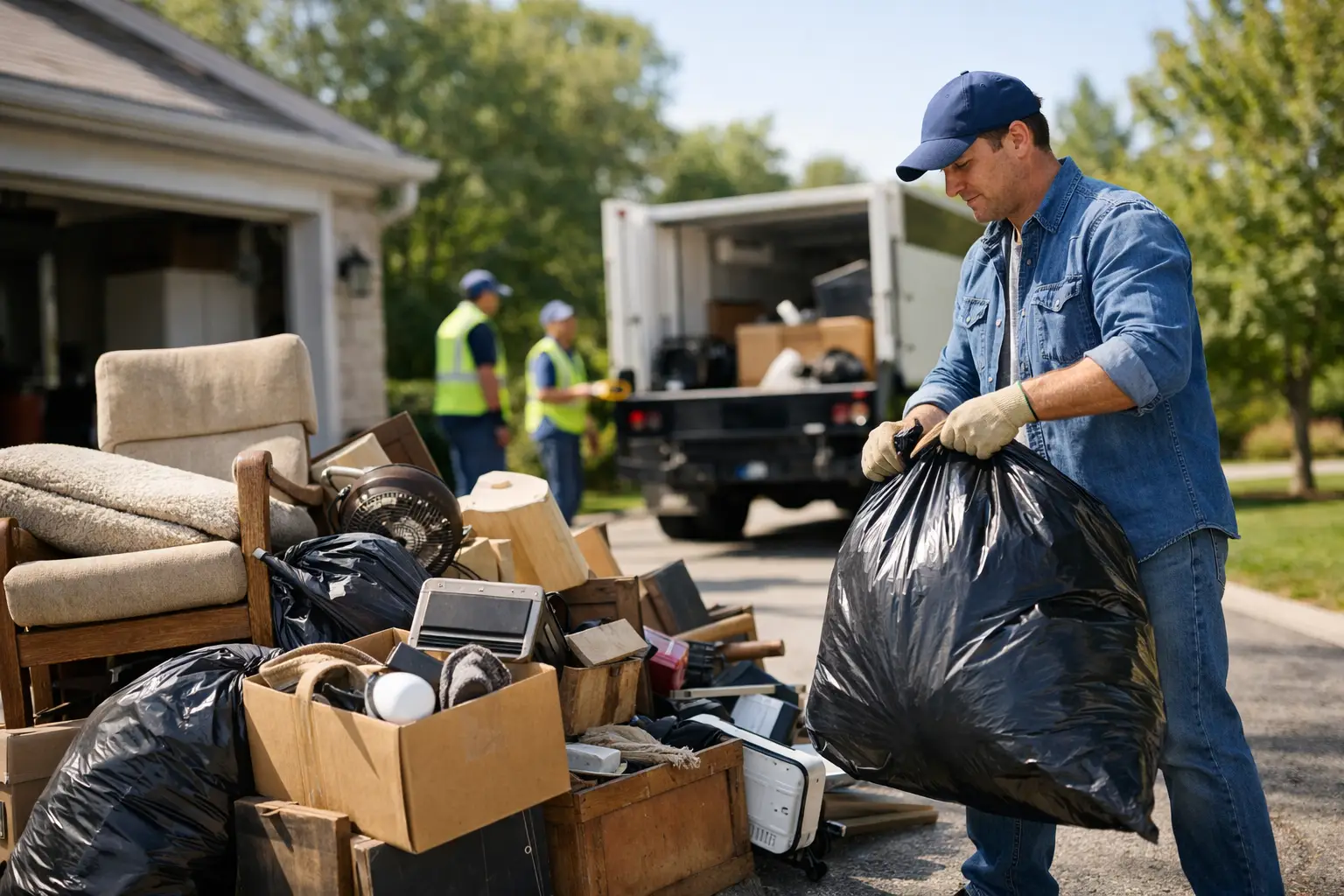
That old couch in the basement is not getting lighter. Neither are the boxes in the garage, the busted patio set, or the pile left after a remodel. Knowing how to prepare junk pickup means your crew can get in, load up, and get the mess out of your life without turning pickup day into a scavenger hunt.
You do not need to scrub every item, build a perfect pile, or spend your weekend trying to drag a sleeper sofa down the stairs. A little sorting and a clear path do most of the work. Here is how to set the job up right.
Start With a Simple Keep-or-Go Decision
The hardest part of a junk cleanout is usually not lifting. It is deciding. If you have been moving the same box from one corner of the garage to another for three years, it may be time to call it what it is: stuff you do not need.
Work one room, closet, or zone at a time. Make a clear distinction between items you are keeping and items leaving the property. If something is heading out, do not leave it mixed in with belongings you want to save. That is how a good pair of boots, a family photo album, or the box with the holiday decorations gets caught in the wrong pile.
For estate cleanouts, this step deserves extra time. Check drawers, desk compartments, file cabinets, coat pockets, and old containers before anything is removed. Important paperwork, keys, jewelry, cash, and sentimental items often turn up where nobody expects them.
Make a Pickup Pile, but Do Not Overdo It
A designated junk area makes it easy to show the crew what goes. A driveway, garage bay, curbside area where allowed, or first-floor room near an exterior door can all work well. If you can safely move smaller items to one spot, great. It gives you a clean visual of the job and can make the quote more accurate.
But do not hurt yourself trying to make the pile look pretty. Heavy furniture, appliances, awkward exercise equipment, and anything upstairs can stay where it is when you book full-service removal. The point is to identify it, not to throw out your back proving you can move it.
If items must stay in separate rooms, that is fine too. Just let the crew know ahead of time. A garage cleanout takes a different plan than a basement full of furniture, and an attic job may require extra attention to stairs, tight turns, or access.
Take Photos for a Better Quote
Photos tell the real story fast. Take wide shots that show the full amount of junk, then add close-ups of unusually large, heavy, or difficult items. A picture of a sectional sofa, a large entertainment center, or a packed shed helps prevent surprises when the crew arrives.
Good photos should show quantity as well as condition. If there are loose bags, broken-down boxes, construction debris, or yard waste, photograph the whole pile from a few angles. Do not hide the stuff behind the big stuff. Upfront pricing works best when everybody can see what needs to be hauled.
If your pile grows after you get a quote, say so before pickup. There is nothing wrong with adding items. It simply may change the space needed in the truck, the labor involved, or the disposal plan.
Clear a Safe Path to the Junk
This is the part people skip, and it matters more than they think. A crew carrying a dresser, refrigerator, or bulky couch needs a route that is clear, dry, and reasonably safe.
Move vehicles out of the driveway if the truck needs room to park. Unlock gates, secure pets, and clear toys, garden hoses, extension cords, and loose tools from walkways. In winter, shovel snow and treat icy steps when possible. In Northwest Ohio, a clear path can be the difference between a quick haul and a slow, slippery job.
Inside, open doors fully and move small furniture that blocks tight hallways. Let the crew know about steep stairs, low ceilings, narrow basement entries, or fragile flooring. You do not need to solve every obstacle yourself. You just need to point out what they are walking into.
Separate Items That Need Special Handling
Not every item belongs in a standard junk load. Before pickup, pull aside anything that could require a different disposal method. This protects the crew, avoids delays, and keeps prohibited materials from getting mixed into the pile.
Common items to flag include:
- Paint, stains, solvents, gasoline, propane tanks, and other flammable or chemical products
- Batteries, fluorescent bulbs, and electronics
- Tires, automotive fluids, and vehicle parts
- Medical sharps, medications, and anything potentially biohazardous
- Large appliances or equipment that may contain fuel, oil, refrigerant, or other fluids
Rules can vary by item and disposal location, so do not assume it can all go in the truck. Ask about questionable materials before the appointment. If you have an old refrigerator, for example, mention it when requesting your quote instead of waiting until the crew is standing in the kitchen.
Empty Furniture, Appliances, and Storage Areas
A dresser that looks empty may still have six drawers full of mystery cables and paperwork. Empty furniture before pickup whenever possible, especially dressers, cabinets, desks, wardrobes, and storage benches. It makes items safer to carry and reduces the chance that something important disappears with the junk.
Unplug appliances before the crew arrives. Clear food from refrigerators and freezers, and let them thaw if needed. Drain any water from washing machines, dehumidifiers, or similar equipment. For grills, empty ashes and remove propane tanks unless you have confirmed they can be accepted.
If you are clearing a shed, take a few minutes to identify tools, chemicals, fuel containers, and anything you plan to keep. Sheds have a way of collecting half-finished projects, and the one thing you need next month is always at the bottom of the pile.
Decide Whether Full-Service Hauling or a Dumpster Fits
How to prepare junk pickup also depends on the kind of job you have. Full-service hauling is usually the better call when you want the heavy lifting handled in one visit. It works well for furniture removal, single-room cleanouts, estate cleanouts, and post-move leftovers. You point, the crew loads, and the junk is gone.
A roll-off dumpster makes more sense when the project will happen over several days. Think remodeling debris, a major garage cleanout, roofing materials, or a rental property turnover where you need time to sort as you go. You load on your schedule, then the container gets hauled away.
There is a trade-off. A dumpster gives you more time, but you do the loading and need space for delivery. Full-service hauling saves labor and is often faster, but it works best when you are ready to make decisions and have the items identified by pickup day.
Be Available for the First Few Minutes
You do not have to hover over the crew all day. Still, being available at the beginning of the appointment is smart. Walk through the job, point out exactly what stays and what goes, and mention anything fragile near the removal path.
If you cannot be there, label the pickup pile clearly and make access instructions unmistakable. A simple note such as “everything on this side of the garage goes” can prevent confusion. Do not rely on vague directions like “take the stuff in back” when there are items you plan to keep nearby.
Do One Last Walk-Through Before the Truck Leaves
Before the load is finished, take a quick look at the areas being cleared. Open the closet. Check behind the door. Look in the shed corner. Make sure the old rug you meant to toss did not get missed, and make sure the box marked “tax records” did not get included by mistake.
That final two-minute walk-through is your chance to catch the obvious things while the truck and crew are still there. Then you can shut the garage door, see the empty space, and get back to whatever comes next.
A good cleanup starts before the hauling crew arrives. Sort what matters, clear the route, flag the tricky items, and let the heavy lifting stay heavy lifting. When you are ready to say bye-bye to the mess, preparation makes the whole job move like it should.