
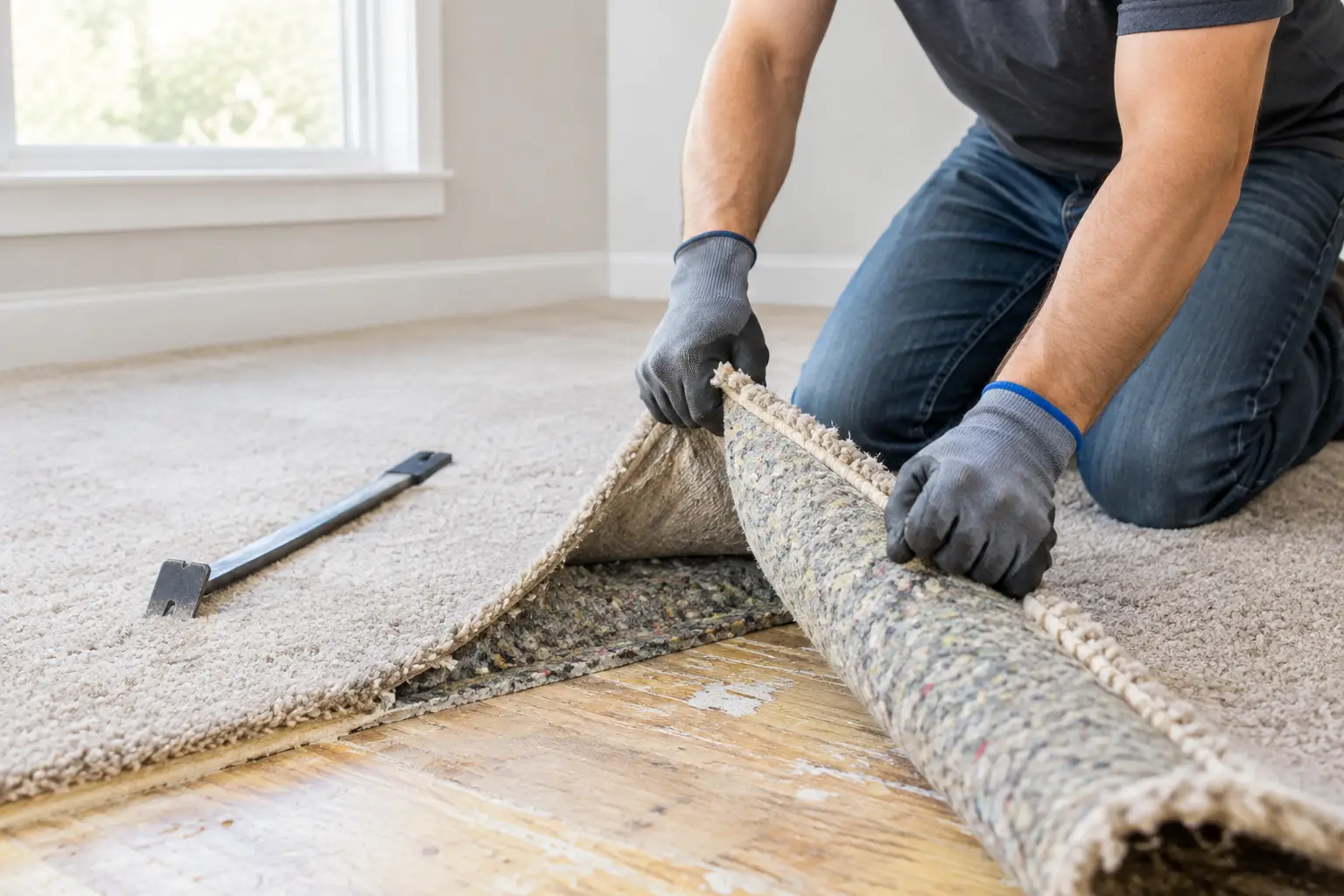
That worn-out carpet may look like one big piece, but it is really a stack of materials waiting to fight you: carpet, padding, staples, tack strips, seams, and a surprising amount of dust. Knowing how to remove old carpet before new flooring goes in can save money and keep the job moving. Rushing it can also leave gouges in hardwood, hundreds of sharp staples in the subfloor, and a garage full of rolled-up carpet you did not plan to deal with.
The good news: most homeowners can handle a single-room carpet tear-out with basic tools, patience, and a solid disposal plan. Start by clearing the room completely. Furniture, closet contents, doors that swing into the room, and floor vents all need to be out of the way before you pull the first corner.
Get the right tools before you start
A utility knife with fresh blades does most of the cutting. You will also want work gloves, safety glasses, a pry bar, locking pliers, a hammer, and a floor scraper or long-handled scraper. A knee kicker is not necessary for removal, but a pair of pliers is helpful when you need to grab a stubborn carpet edge.
Bring a shop vacuum if you have one. Old carpet holds dust, pet hair, and grit that will show itself the minute the padding comes up. If the carpet has a musty smell, visible mold, rodent droppings, or signs of a major water leak, wear a properly fitted mask and consider stopping to address the underlying problem first.
Keep a heavy-duty trash container nearby for staples, tack-strip pieces, and utility knife blades. These small leftovers are exactly what cause flat tires, torn trash bags, and painful surprises later.
How to remove old carpet, one section at a time
Start in a corner where the carpet is not tucked tightly beneath baseboard or a transition strip. A closet corner often works well. Put on gloves, grab the carpet with pliers, and pull upward. Carpet is typically stretched over tack strips around the room perimeter, so the first pull takes some effort. Once one corner releases, you can usually pull the carpet away from the strips by hand.
Do not try to drag the entire room's worth of carpet out in one giant sheet. It is awkward, heavy, and difficult to carry through a doorway without banging walls or catching on trim. Instead, pull back a manageable section and cut it into strips roughly 3 to 4 feet wide.
Cut from the carpet backing side whenever possible. Fold the released carpet over so the backing faces up, then slice with steady, shallow passes. Do not drive the blade hard into the floor below. If you are working over hardwood, use extra caution. A cut in a carpet roll is harmless; a cut in original flooring is a repair project.
Roll each strip tightly with the backing facing outward and secure it with duct tape or twine. Compact rolls are easier to carry, easier to stack, and far less likely to unroll in the driveway. Continue across the room until the carpet is gone.
Watch for seams and transitions
Large rooms often have seams where two carpet pieces were joined. These may pull apart easily, or they may be stubbornly bonded. Cut along the seam rather than fighting it. At doorways, remove metal transition strips carefully if they need to be replaced, or work around them if they are staying.
If carpet continues into another room, make a clean cut beneath the doorway or at the planned flooring transition. Measure twice before cutting. A neat stopping point is much easier to cover with a proper threshold than a ragged edge cut six inches into the next room.
Pull up the pad and deal with staples
The carpet pad is usually much lighter than the carpet, but it can be messier. Foam pad may be stapled down in long rows, while older felt or rubber pads may be glued. Pull up a corner and see what you are dealing with before committing to a method.
For stapled padding, tear it into strips and pull it back slowly. Most staples will either come out with the pad or remain standing in the subfloor. Use pliers, a scraper, or a small pry bar to remove every staple you can find. Running your hand over the floor is not a safe way to check your work. Sweep or vacuum, then inspect in good light from a low angle. Staples are easier to spot when their shadows show.
A floor scraper can speed up this stage, especially on plywood or concrete. Keep the blade fairly flat so it slides under staples instead of digging into the surface. On hardwood, work by hand when possible. It is slower, but replacing a scratched board is slower still.
Glued pad requires more patience. Pull up what comes loose, then scrape the remaining foam and adhesive. Avoid soaking a wood subfloor with water or harsh chemicals. If new flooring is going over the area, check the installer or flooring manufacturer's requirements. Some adhesives need to be removed completely; others can be covered after they are scraped flat and stable.
Should you remove the tack strips?
It depends on the floor you are keeping and the flooring going back in. Tack strips are narrow wood strips lined with angled nails. They are sharp, even after the carpet is gone, so do not leave them exposed while you work.
If new wall-to-wall carpet is being installed, the existing tack strips may be usable if they are dry, secure, and located correctly. A flooring installer can make that call. If you are switching to vinyl plank, laminate, tile, refinished hardwood, or another hard surface, the tack strips generally need to go.
Slide a pry bar under the strip near one of its nails, then lift gently. Work from nail to nail rather than trying to rip up a long section at once. This reduces the chance of splintering the strip or damaging the subfloor. On concrete, tack strips may be held with masonry nails that leave small holes behind. That is normal and can usually be patched before new flooring goes down.
Be especially careful over hardwood. Tack strips can leave nail holes and sometimes pull up surface fibers. If the goal is to refinish the wood, remove the strips slowly and plan on filling holes as part of the prep work.
Check what the carpet was hiding
Once the room is bare, resist the urge to immediately cover it again. Vacuum thoroughly, including edges and corners, then inspect the floor. Look for dark water stains, soft spots, loose subfloor panels, squeaks, pet damage, and signs of insects. Carpet can hide problems for years.
A small stain may not matter if you are installing new flooring with an underlayment. A soft area, active moisture issue, or loose subfloor does matter. Fixing those problems now is cheaper and simpler than tearing up a brand-new floor later.
If you uncover hardwood, test a small, inconspicuous area before deciding it is ready to keep. Old carpet can leave adhesive, faded outlines, tack-strip holes, and uneven color. Sometimes the floor cleans up beautifully. Sometimes it needs refinishing. Either way, you will know before ordering materials.
Have a disposal plan before the first roll
Old carpet is bulky fast. A bedroom can produce several heavy rolls, plus padding, tack strips, and the rest of the renovation debris. Do not count on a regular trash bin to handle it. Local disposal rules and pickup limits vary, and wet or contaminated carpet can be especially difficult to manage.
For one small room, a trip to an approved disposal facility may be practical if you have a suitable vehicle and can safely secure the load. For a whole-house flooring project, a dumpster gives you room to work on your own schedule. If the carpet is only one part of a larger cleanout or remodel, full-service hauling can make more sense than spending your weekend wrestling rolls into a truck.
Around Bowling Green and northwest Ohio, Bye-Bye Buckeye can handle the heavy lifting with a full-service haul or provide a roll-off dumpster when you want to tear out carpet room by room. The right choice comes down to how much debris you have, how quickly you need the space cleared, and whether you want to load it yourself.
Keep the job safe and the floor ready
Carpet removal is straightforward, but it is not a job to rush. Change dull utility blades often, keep children and pets away from tack strips, and carry carpet rolls with help when they are too heavy or awkward for one person. If you are working upstairs, move rolls down one at a time and keep stairways clear.
When the last staple is out and the floor is clean, pause before the new flooring arrives. That clear, bare room is your chance to fix what was hidden, choose the next surface with confidence, and finally tell that old carpet bye-bye.