
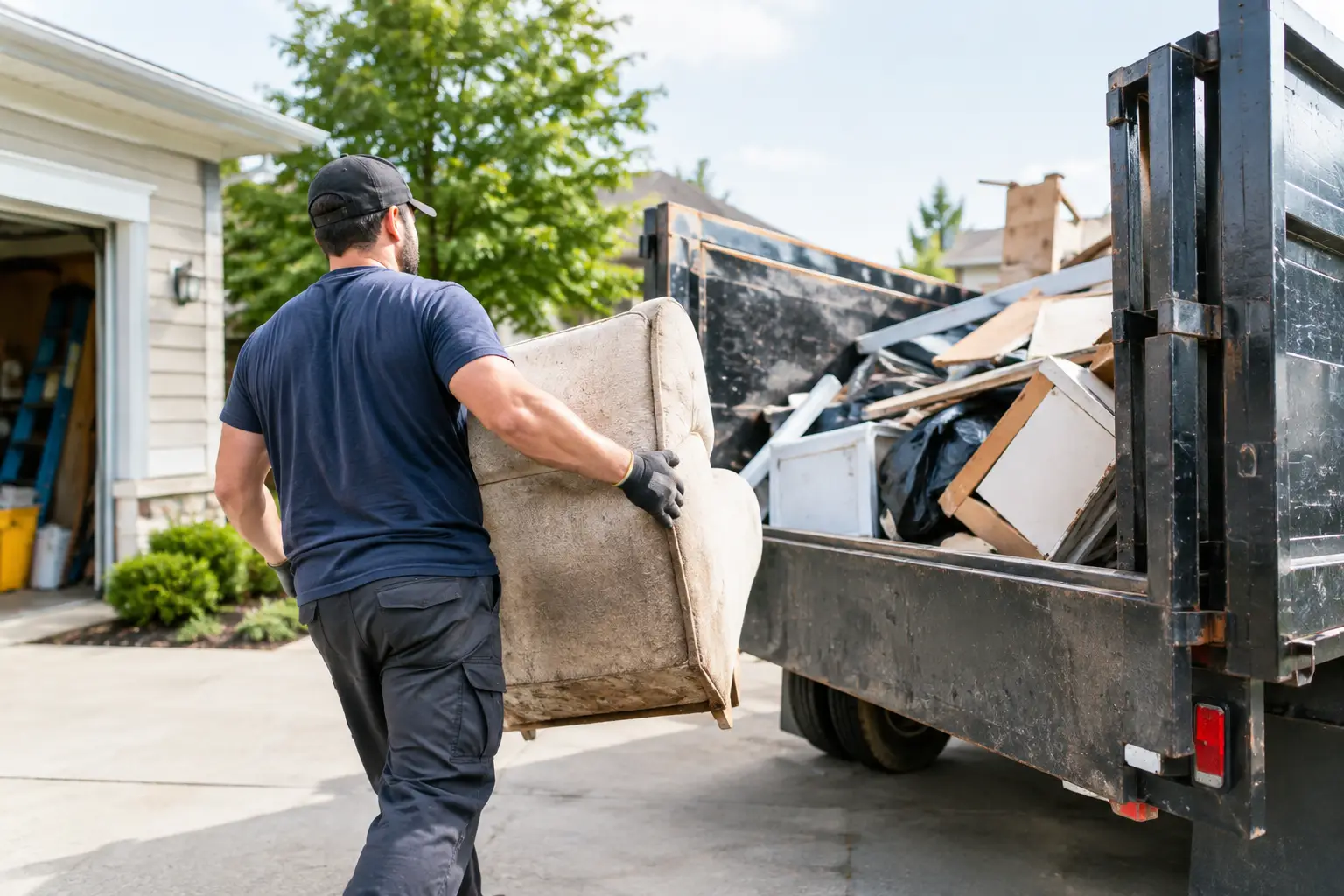
A torn-up bathroom, a garage that has not seen a car in years, a move-out pile on the curb - debris has a way of getting bigger every time you look away. This Northwest Ohio debris hauling guide helps you make one useful decision early: do you want somebody else to lift it, or do you need time to fill a dumpster yourself?
That choice affects the cost, the work, the driveway space, and how quickly your property gets back to normal. Start there, then sort the pile before anyone loads a thing.
Pick Your Lane: Full-Service Haul or Dumpster
A full-service haul is built for the job you want gone now. A crew arrives, carries out the old furniture, bagged trash, boxes, broken fixtures, or renovation leftovers, loads the truck, and takes it away. It is the better fit when the debris is already gathered, when stairs are involved, when lifting is not in the cards, or when you are facing an estate cleanout with a lot of decisions already on your plate.
The main trade-off is control of the timeline. A haul happens in a defined appointment window, so it works best when you can identify what is leaving and have it ready for the crew to see. It is not the right tool for a three-week project where new debris will appear every Saturday.
A roll-off dumpster gives you that breathing room. It is delivered, you load as the work happens, and it is picked up when the job is done. That makes sense for roofing tear-offs, remodeling, flooring removal, landscaping projects with bulky non-organic debris, or a whole-house cleanout where the attic, basement, shed, and garage all need attention.
The trade-off is simple: you do the lifting, and the container needs a safe, accessible place to sit. Think about where the truck can deliver it, whether cars can still get around it, and whether the driveway surface needs protection. If you are between choices, estimate the labor honestly. A free Saturday can disappear fast once you are hauling a sleeper sofa down a narrow staircase.
Northwest Ohio Debris Hauling Guide: Size the Job First
The easiest way to overpay is to guess at volume from one intimidating pile. Walk the property room by room. Make a separate mental tally for furniture, bagged household clutter, construction material, appliances, and anything that might need special handling. Then take a few photos from the doorway or driveway. Photos make it much easier to describe the job accurately when requesting a quote.
For dumpster projects, cubic yards measure volume, not weight. A 10-yard dumpster is often a practical choice for a small cleanout, a single-room refresh, or dense materials from a modest project. A 15-yard container offers more room for a medium cleanout or several rooms of flooring and fixtures. A 20-yard dumpster is a common sweet spot for larger renovations and substantial household debris. A 30-yard dumpster is for the big stuff: major renovations, large property cleanouts, or jobs producing a steady stream of bulky material.
Bigger is not automatically better. A large container can be wasteful for a small project, while a too-small one may leave you with an extra pickup or debris still sitting in the yard. Weight matters too. Concrete, brick, dirt, shingles, and wet materials can get heavy long before a dumpster looks full. Tell the hauler if those materials are in the plan. That one detail helps prevent surprises and may determine the safest container size.
For full-service pickup, focus less on cubic yards and more on how much space the material occupies in a truck. Keep like items together if you can. A clean pile in the garage is faster to assess than scattered items in six rooms, and faster jobs tend to be simpler jobs.
Sort Before You Haul
Not everything in a cleanout belongs in the same load. Taking 20 minutes to sort can save time, prevent prohibited items from getting mixed in, and keep usable goods from becoming landfill material by default.
Set aside documents, prescription medication, family photos, cash, keys, and anything you have not opened or checked. Cleanouts move quickly once loading starts. If an item matters, pull it out of the work zone first.
Next, separate materials that may have a second life. Working appliances, clean furniture, tools, unopened building supplies, and decent household goods may be worth donating, selling, or giving to family. Do not let that possibility stall the whole project, though. If the item has been listed for weeks with no takers, it is probably time to move on.
Finally, identify materials that require special instructions. Typical examples include:
- Paint, solvents, fuels, and other chemicals
- Batteries, propane cylinders, and fire extinguishers
- Tires, electronics, and certain appliances
- Medical waste, asbestos-containing material, and unknown substances
Rules and accepted materials can vary by disposal site, container type, and condition of the item. Ask before loading if you are unsure. Never hide prohibited material under bags or construction debris. It creates a safety problem for the crew and can turn a straightforward pickup into a delayed, more expensive job.
Make the Load Easier and Safer
Whether you choose a crew or a dumpster, clear a path. Move vehicles from the loading area, unlock gates, secure pets, and make sure the crew can see stairs, uneven ground, low branches, or other obstacles before work begins. If the debris is outside, keep it away from utility meters, hydrants, and the street where it can become a traffic or drainage issue.
For a dumpster, load heavy material first and spread it across the bottom. Break down boxes, stack flat pieces of wood when possible, and fill gaps with smaller items. Keep everything below the top rail. Material sticking out of the container can make transport unsafe and may require reloading before pickup.
Do not turn a dumpster into a mystery box. Separate unusually heavy debris, do not toss in items that could puncture or damage the container, and keep a tarp or cover handy if rain is expected and your material will become heavier when wet. Northwest Ohio weather does not need much notice to turn drywall scraps and cardboard into a soggy, heavy headache.
For full-service hauling, point out everything that is going and everything that is staying. A piece of painter's tape, a sign, or a clearly marked corner helps when the basement contains both donation boxes and items you plan to keep. Clear instructions beat a last-second sprint toward the truck.
Ask What the Quote Covers
Upfront pricing starts with a clear description of the job. Give the hauler the location of the debris, the type of material, access conditions, and whether heavy materials are included. Mention basement stairs, a long carry from the backyard, a gated alley, or a steep driveway. Those details are not minor. They affect labor, equipment, and the amount of time a job takes.
For a dumpster, confirm the container size, rental period, included weight, delivery and pickup timing, and what happens if you need more time or a second container. Ask how the driveway will be protected and what clearance the delivery truck needs. If street placement might be necessary, check local requirements before delivery rather than after the truck arrives.
For a full-service haul, confirm whether pricing is based on volume, labor, material type, or a combination. You should know what is included before loading begins. A clear quote lets you compare the actual job, not vague promises.
Know When to Call for Muscle
Some jobs are physically demanding but ordinary: old couches, mattresses, busted cabinets, piles of bagged clutter, carpet, and renovation debris. Others have a risk factor that should stop the DIY plan. Moldy materials, suspected asbestos, sharp demolition debris, heavy safes, unstable piles, and unknown chemicals deserve extra caution and, in some cases, specialized handling.
A two-person crew is especially useful when the real obstacle is not the amount of junk but the route it has to travel. Basement steps, tight hallways, heavy appliances, and oversized furniture are where sore backs and damaged walls happen. The goal is not to prove you can move it. The goal is to get it out safely.
Bye-Bye Buckeye offers two straightforward ways to clear the mess around Bowling Green and Northwest Ohio: a crew that loads and hauls, or a roll-off dumpster you fill on your schedule. The right option is the one that matches your pile, your timeline, and how much lifting you are willing to do.
Start with one room, one pile, or one project area. Once you separate what stays, what can be reused, and what needs to go, the job stops looking like a mess and starts looking like a plan.