
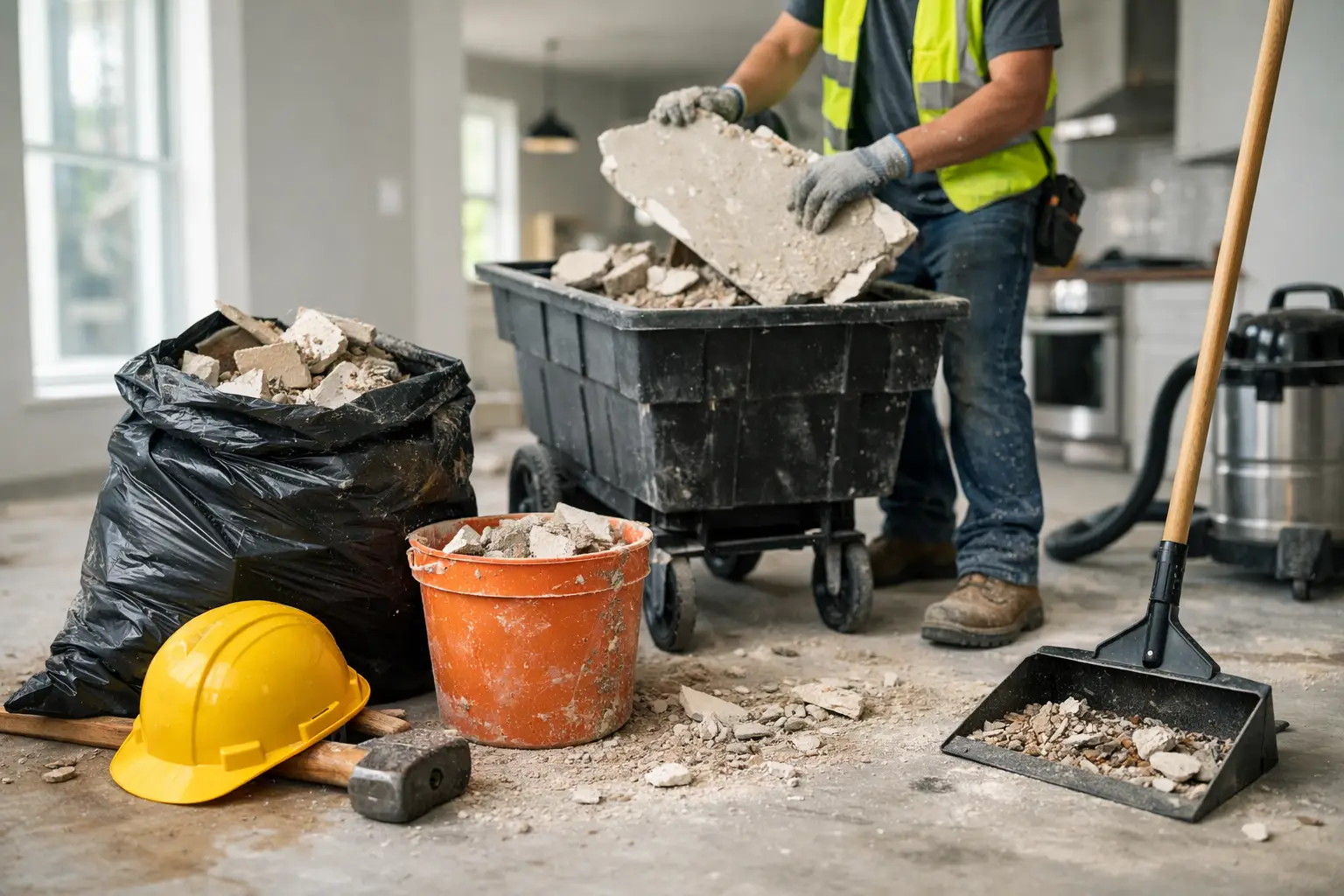
The last contractor truck pulls away, the new room looks great, and then you notice what is still sitting in the driveway: drywall scraps, busted boxes, lumber cutoffs, old fixtures, and one very heavy pile of who-knows-what. Post construction debris removal is the part of the job nobody puts in the before-and-after photos. It is also what stands between “the work is done” and actually getting your home, rental, or job site back.
Cleanup is not just about making a pile disappear. The right plan keeps sharp materials off the ground, keeps your project moving, and saves you from turning your pickup bed into a tiny, overloaded dumpster. Whether you just finished a bathroom refresh or wrapped up a full remodel, here is how to clear the mess without making a second project out of it.
What Counts as Post Construction Debris?
Construction debris is the leftover material from building, remodeling, demolition, repairs, or property turnover. Some of it is bulky. Some of it is awkward. Some of it is deceptively heavy once it gets wet or piled together.
A typical cleanup load may include lumber, drywall, flooring, trim, cabinets, doors, cardboard, plastic wrap, insulation, siding, shingles, tile, brick, concrete, or old appliances and fixtures removed during the work. The mix matters because it affects how much space you need, how the load should be handled, and where materials can go after pickup.
The biggest mistake is judging a pile by its footprint. A small stack of broken tile or plaster can weigh far more than a larger mound of cardboard and trim. Wet drywall, roofing materials, and dirt-covered debris can add weight fast, too. A good cleanup plan accounts for both volume and weight before the pile gets out of hand.
Start Cleanup Before the Final Day
Waiting until every tool is packed up can work for a small project. For larger jobs, it usually creates a bottleneck. Materials get mixed together, pathways get blocked, and the final cleanup turns into a long day of sorting and hauling.
Set aside a clear staging area early. Keep debris away from doors, walkways, vehicles, utility access, and anything you still need to protect. If you are renovating inside, use a designated spot near the exit so materials only travel through the house once. That means less dust, fewer scuffed walls, and fewer trips carrying debris across a finished floor.
It also helps to separate obvious recycling or donation candidates before they get buried. Clean cardboard, scrap metal, usable cabinets, and unopened materials are much easier to handle when they are not mixed with broken drywall and demolition dust. That said, do not spend hours sorting a modest pile just to save a few minutes later. The right amount of sorting depends on the size of the job and what is actually in the load.
The Safety Part Is Not Optional
A pile of renovation waste is not regular household junk. It can hide nails, screws, blade fragments, staples, broken glass, and sharp metal edges. If demolition was involved, it may also contain heavy materials that shift when lifted.
Wear gloves that can handle splinters and sharp edges, closed-toe shoes with sturdy soles, and eye protection when breaking down or moving materials. Keep kids and pets clear of the cleanup zone. If you are loading a dumpster, do not climb onto unstable piles or toss heavy pieces blindly over the side. A quick shortcut is not worth a puncture wound or a strained back.
Be especially careful with drywall, shingles, concrete, soil, tile, and brick. These materials get heavy enough to make a container exceed weight limits long before it looks full. Spread dense debris across the bottom rather than building one heavy corner. For a mixed load, put the heavy stuff in first and use lighter materials to fill the open space.
Choose Your Lane: Full-Service Haul or Dumpster
The best post construction debris removal method comes down to one question: do you want the debris gone now, or do you need time to fill a container as the work continues?
Full-service hauling works when the pile is ready
If the project is finished and the debris is already gathered, a full-service haul is often the cleanest answer. A crew does the lifting, loading, and hauling, so you do not have to rent equipment, recruit friends, or spend a Saturday making disposal runs.
This option makes sense for a bathroom remodel, a flooring tear-out, a garage cleanup after a renovation, or a moderate pile that is not going to grow. It is also useful when access is tight and you do not want a container sitting in the driveway. The trade-off is simple: the load needs to be ready when the crew arrives, because the goal is to clear it in one shot.
A roll-off dumpster works when the job is still moving
A dumpster gives you room to work on your own timeline. It is a solid fit for bigger renovations, cleanouts tied to a remodel, roofing work, repeated demolition days, or projects where debris will keep coming for a week or more.
With a dumpster on site, crews and DIYers can keep the work area cleaner as they go. Instead of stacking waste in the yard or garage, it goes straight into the container. The trade-off is that you need a suitable delivery spot, a clear route for the truck, and a realistic idea of the size you need.
For many projects, a 10-yard dumpster handles a small renovation or a dense material load. A 15- or 20-yard container often fits mid-size remodeling work. A 30-yard dumpster is better for major renovations, large cleanouts, or bulky material that eats up space quickly. Size is not just about square footage. A kitchen full of cabinets may take more room than a small bathroom full of tile, while the bathroom debris may weigh more.
Know What Needs a Separate Plan
Most ordinary construction debris can be hauled away with the right service. A few materials may require separate handling, special approval, or a different disposal route. Before loading anything, ask about items such as:
- Paint, solvents, fuel, chemicals, and other hazardous products
- Propane tanks, batteries, and electronics
- Tires and certain large appliances
- Materials that may contain asbestos or lead-related hazards
Do not bury questionable items at the bottom of a load and hope for the best. That can create safety issues, delay pickup, or lead to extra disposal costs. When in doubt, identify the material first. A reputable hauler should be clear about what can go in the truck or dumpster and what needs another solution.
Make Loading Faster, Safer, and Cheaper
A little prep goes a long way. Break down empty boxes. Bundle loose trim or long pieces of lumber when practical. Pull large items apart only if doing so is safe and will meaningfully save space. There is no prize for reducing every cabinet into tiny pieces, but a few smart cuts can keep a bulky load from wasting half a container.
Keep the load level. Debris that sticks above the rim of a dumpster can be unsafe to transport and may need to be rearranged before pickup. Do not try to compact materials with a vehicle or heavy equipment unless the container provider specifically allows it. Containers are tough, but they are not built for every kind of force.
Access matters, too. Move cars out of the way. Clear low branches where possible. Tell the provider about narrow driveways, steep grades, gates, or soft ground. In Bowling Green and across Northwest Ohio, weather can turn an easy delivery spot into soft, rutted ground after a stretch of rain. A quick heads-up helps prevent a simple drop-off from becoming a complicated one.
Do Not Let the Cleanup Undercut the Finished Work
A remodeled room should not end with nails in the driveway, dust in the garage, and a leaning mountain of scraps by the curb. Once the big debris is gone, do one last sweep for the small stuff: fasteners, broken tile chips, packaging, plastic straps, and scrap pieces hiding in landscaping or corners.
Then take a look at what remains. Is the driveway clear? Are walkways safe? Can the garage be used again? Has the site been cleared well enough for the next trade, an inspection, a move-in, or the simple pleasure of being done?
That is the real finish line. Bye-Bye Buckeye gives property owners two straightforward ways to reach it: we load and haul the pile, or we drop a dumpster so you can fill it on your schedule. Either way, the job is not truly finished until the mess gets its goodbye.