
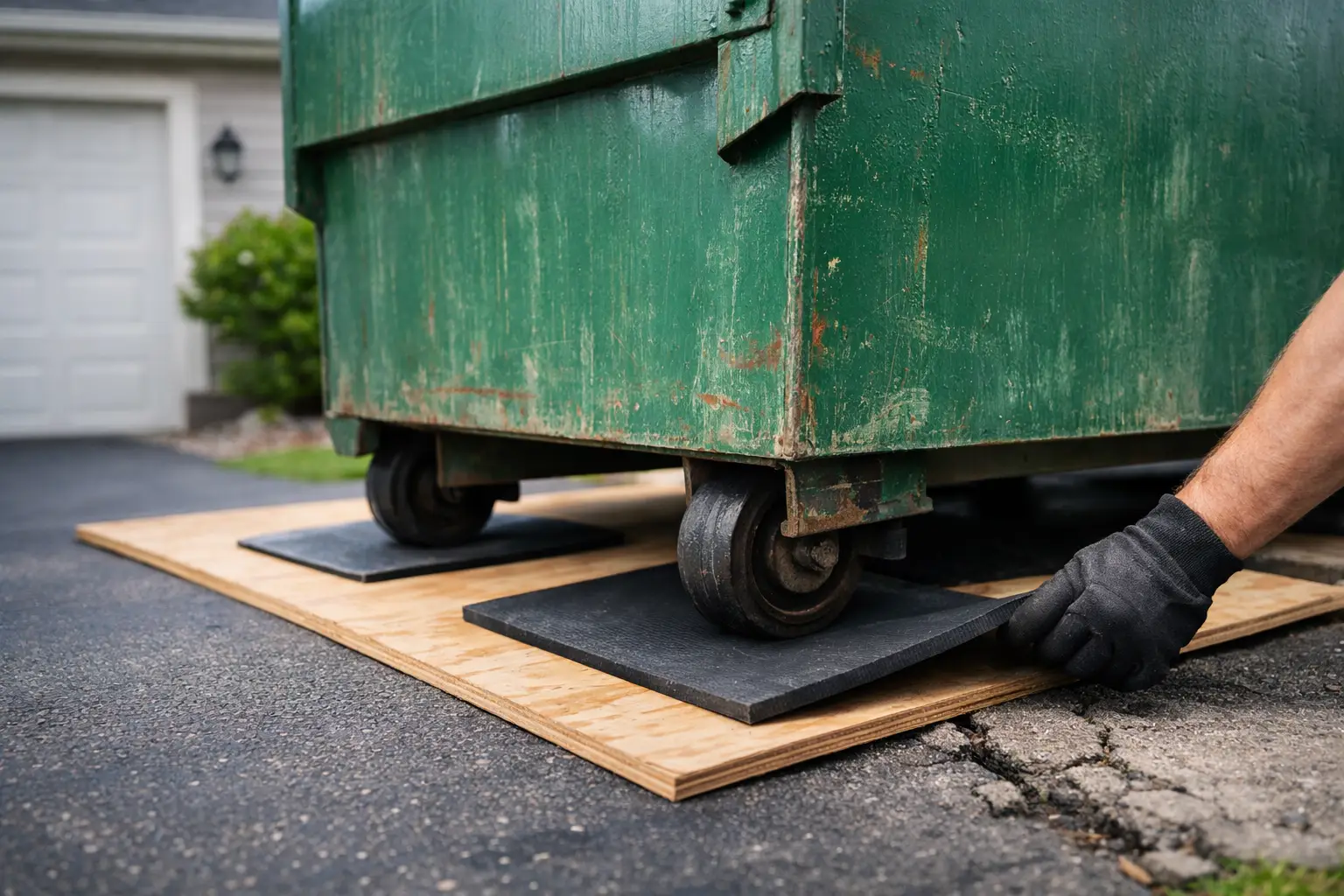
A roll-off dumpster makes a garage cleanout, roofing tear-off, remodel, or estate cleanout a whole lot simpler. The pile has somewhere to go. The driveway, though, is doing real work too. To protect driveway surfaces, plan for the container before the truck arrives, not after a heavy load has been sitting in one spot for a week.
The good news: driveway protection is usually straightforward. A little prep can reduce the chance of scratches, pressure marks, cracked edges, or scuffs when a dumpster is delivered and picked up. The right approach depends on whether you have concrete, asphalt, pavers, gravel, or a newer surface that has not fully cured yet.
Why dumpsters can be tough on driveways
A dumpster is heavy before anyone tosses in the first bag. Add old flooring, drywall, roofing shingles, lumber, appliances, or demo debris, and the weight climbs fast. That weight is spread across the dumpster's rails or wheels, depending on the style of container and delivery equipment.
Delivery and pickup are the moments that deserve the most attention. The driver needs room to position the dumpster safely. At pickup, the container is pulled onto the truck, and a packed box may shift slightly as it moves. A professional operator works carefully, but no driveway is indestructible, especially one with existing cracks, thin edges, poor drainage, or soft ground nearby.
Northwest Ohio weather adds another variable. A hard freeze, spring thaw, days of rain, or summer heat can make a surface more vulnerable than it looks. The same driveway that handles daily cars without trouble may need extra protection during a large cleanup project.
Protect driveway surfaces before delivery day
The simplest rule is this: prepare the spot while it is empty. Once the dumpster is in place, it is too late to slide protection underneath or reconsider its location.
Choose the strongest, flattest placement area
For a paved driveway, aim for a level section with solid support underneath. Keep the dumpster away from visibly cracked areas, crumbling edges, utility covers, drains, and steep slopes. The middle of a sound driveway is often safer than the outer edge, where concrete or asphalt may have less support from the soil below.
Do not assume the street is an automatic alternative. Some neighborhoods, homeowner associations, and municipalities have rules about street placement, permits, or blocked access. A street can also create safety issues for traffic, mail delivery, and neighbors. If the driveway is your best option, make it the best-prepared option.
Avoid grass, wet soil, and soft gravel whenever possible. A heavy container can sink, tilt, leave ruts, or become harder to retrieve. If your property has a compacted gravel drive, discuss it during booking. A light household cleanout may be different from a heavy renovation load full of tile, concrete, or shingles.
Put down a protection layer
Wood is the standard answer for a reason. Place wide, sturdy plywood or thick lumber boards where the dumpster's contact points will sit. The goal is to spread the load over a broader area and keep metal rails from resting directly on the driveway.
For many residential jobs, two or more sheets of plywood provide a practical buffer. Use material that is flat, dry, and strong enough for the task. Thin, warped, waterlogged, or broken scraps are not much help. If your driveway is decorative concrete, pavers, freshly sealed asphalt, or already showing damage, step up the protection with thicker boards and ask about the placement plan before delivery.
Do not use loose cardboard, plastic sheeting, rugs, or a single flimsy sheet of particleboard. They can tear, slide, trap moisture, or create a false sense of protection. The point is not to make the area look covered. The point is to create a stable load-spreading base.
Clear the approach, not just the parking spot
The truck needs a clean path in and out. Move cars, trailers, basketball hoops, planters, low decorations, and anything else that narrows the driveway. Trim low branches if they hang over the approach. Check for low wires too.
Leave enough room around the dumpster for loading. If the door swings open, it needs clear space behind it. You do not want a container placed in the only spot where the garage door, gate, or daily vehicle access becomes unusable.
Take a few photos of the driveway before delivery, especially if there are existing stains, cracks, or chips. It is a sensible habit for any major project, not a sign that you expect a problem. Clear documentation helps everyone start on the same page.
Match the dumpster and debris to the driveway
Bigger is not always better. A dumpster that is too small can mean overflow and a second container. A dumpster that is much larger than your project may take up unnecessary space and invite people to overfill it with heavy material.
Think about what you are throwing away, not just how much room it takes up. Old furniture is bulky but relatively light. Roofing shingles, bricks, dirt, concrete, plaster, and tile are dense. A container full of heavy debris puts more stress on the driveway and may have loading limits for safe hauling.
For a quick purge of a basement or garage, full-service junk removal can be easier on both your back and your driveway. A crew loads the items into a truck and leaves, rather than keeping a container on-site through a long weekend. For a remodel, move-out, or project where debris will pile up over several days, a driveway dumpster can still be the right tool. It just calls for a little more planning.
Load it evenly and keep it legal
Once the dumpster is down, the driveway-protection job is not finished. How you load the container affects pickup.
Start heavy materials low and distribute them from front to back rather than building one dense mountain near the door. Break down boxes, stack materials when it is safe, and keep debris below the top rail. Overfilled dumpsters are not just messy. They can be unsafe to tarp, transport, and lift onto the truck.
Keep the area around the container clear. Loose boards, bags, nails, and scattered debris create trip hazards and can get in the way when the truck returns. If rain is coming, cover materials that can become dramatically heavier when wet, such as mattresses, carpet, or open bags of debris.
Never move or drag the dumpster yourself. Trying to shift a loaded container with a vehicle, skid steer, or improvised lever can damage the surface, damage the container, and hurt someone. If the placement is not working, call before making a bigger problem.
Driveway material changes the plan
Concrete driveways
Concrete is strong under normal vehicle traffic, but it is not immune to concentrated weight. Watch the edges, expansion joints, existing cracks, and areas where the slab has settled. Plywood or lumber beneath the contact points is a smart precaution, particularly for a loaded dumpster or older concrete.
New concrete needs extra care. It may look finished long before it has achieved its intended strength. Follow the installer's guidance before placing heavy equipment or containers on it.
Asphalt driveways
Asphalt is more flexible than concrete, but it can soften in hot weather and deform under a concentrated load. Fresh asphalt is especially vulnerable. Use wider, thicker boards, avoid the edges, and do not place a dumpster on a newly paved drive unless the paving contractor says it is ready.
On warm summer days, do not be surprised if asphalt needs more protection than it would in cool weather. Sun exposure and the age of the surface matter.
Pavers and decorative surfaces
Pavers, stamped concrete, and decorative coatings deserve a cautious approach. Individual pavers can shift, and decorative finishes may chip or scuff more easily than plain concrete. A larger protective base helps, but it may be wiser to consider another approved placement area if the surface is expensive, fragile, or already uneven.
Gravel driveways
Gravel avoids some scratching concerns, but it brings its own problems. Heavy containers can settle into loose stone and leave deep impressions. A firm, well-compacted section is better than a recently added or muddy area. Let the hauler know about slopes and soft spots ahead of time.
Check the conditions before pickup
A dumpster can sit perfectly for days, then face a muddy thaw or a slick rainstorm on pickup day. Walk the area before the truck arrives. Remove snow piles, loose ice, branches, or anything blocking the approach. If the ground beside the driveway has turned soft, keep vehicles away from it so the driver has the clearest possible route.
Make sure the container is loaded within its limits and the top is clear for safe transport. If the dumpster door was used, close and secure it according to the delivery instructions. Then leave the route open. Pickup goes faster when the crew can pull in, load up, and haul it out without playing driveway obstacle course.
A dumpster should make your project feel lighter, not leave you worrying about the pavement underneath it. Pick a solid spot, put down real protection, load with common sense, and keep the access clear. Then you can focus on saying bye-bye to the mess.