
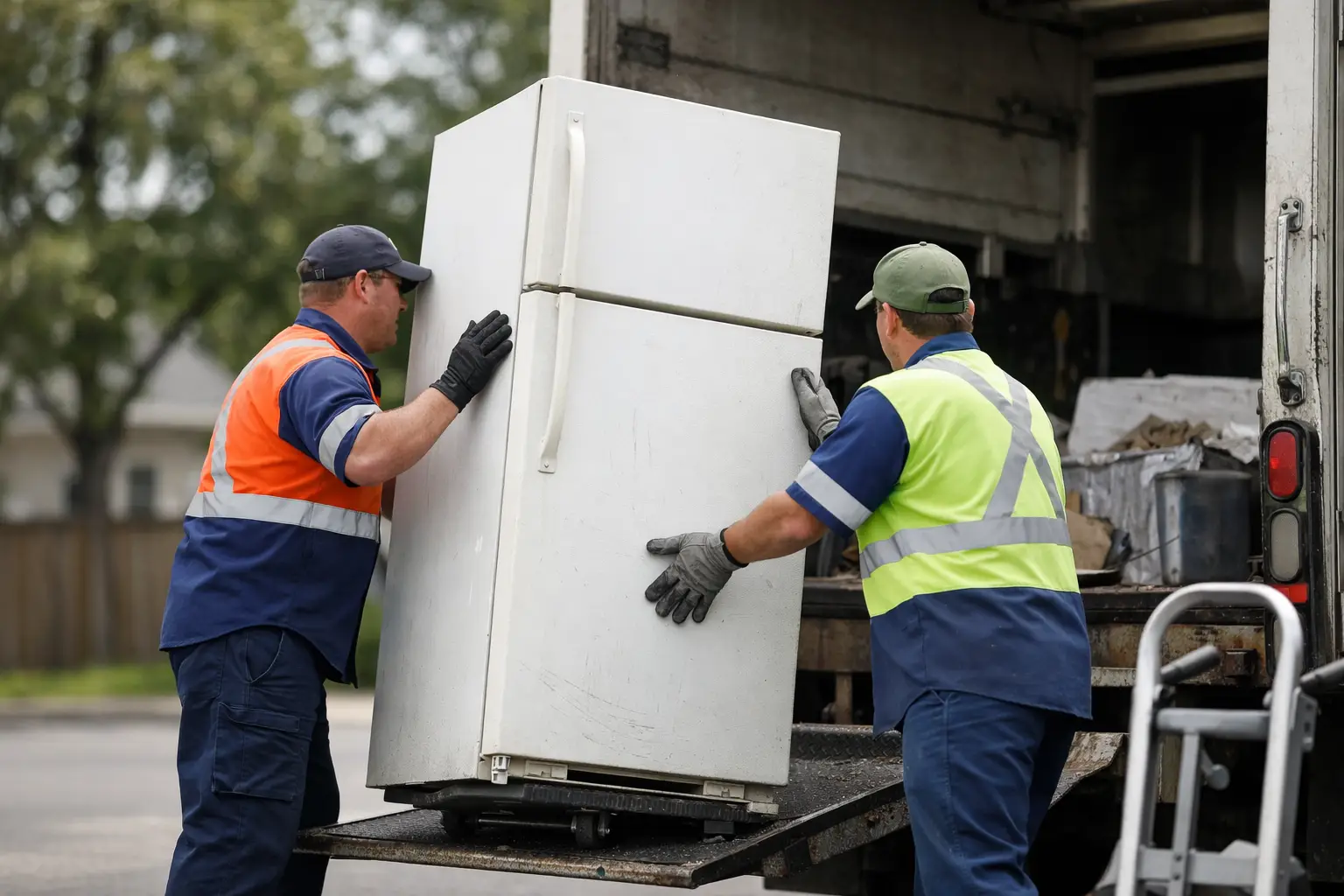
That dead refrigerator in the garage is not just taking up floor space. It is heavy, awkward, and full of components that need a smarter exit plan than a trip to the curb. A refrigerator disposal pickup service handles the hard part: getting the appliance out safely and routing it through the proper disposal process.
For homeowners around Bowling Green and Northwest Ohio, the real question is usually not whether the old fridge has to go. It is whether it is worth wrestling down the steps, borrowing a truck, and figuring out where it can legally be dropped off. Most of the time, the answer is no.
Why Refrigerators Need Special Disposal
A refrigerator is not regular household junk. Older and newer units alike contain refrigerant, compressor oil, metal, wiring, insulation, and electronic parts. Those materials affect where the appliance can go and who can handle it.
The refrigerant is the big reason. It must be properly recovered before the refrigerator is recycled or processed. Dumping an intact refrigerator in a landfill, leaving it on the curb without checking local rules, or trying to break it apart at home can create a problem that is bigger than one bad appliance.
There is also the weight. A standard refrigerator can weigh well over 150 pounds, while larger French-door, side-by-side, and commercial-style models may weigh much more. Getting one through a narrow kitchen, around a stair landing, or out of a basement is a two-person job at minimum. One slipped grip can mean a damaged wall, damaged floor, or an injured back.
That is why a professional refrigerator disposal pickup service is often the cleanest option. The crew handles the lifting, loading, and haul-away while the appliance is directed to an appropriate facility or recycling stream.
When Pickup Is the Better Move
If the refrigerator is already sitting in your driveway with a clear path to the street, you may have a few disposal choices. Some municipal programs, scrap facilities, and appliance retailers offer options in certain areas. The catch is that rules, fees, pickup days, and appliance condition requirements can vary.
Full-service pickup makes the most sense when the fridge is still inside, access is difficult, or you have other junk leaving at the same time. Maybe you are replacing kitchen appliances, clearing an estate property, finishing a basement cleanout, or finally dealing with that spare fridge that quit cooling three summers ago. One truck load can handle more than one problem.
It is also the better choice when time matters. Hauling a refrigerator yourself can turn into a full Saturday: find help, protect the vehicle, secure the load, confirm facility hours, unload it, and clean up afterward. A hauling crew is built for the lift-and-go version of that job.
At Bye-Bye Buckeye, full-service hauling means a two-person crew does the heavy lifting. You point out what is leaving. The crew loads it up and hauls it away. No dolly rental, no truck bed straps, no convincing a friend to spend their afternoon carrying an appliance down the stairs.
How to Prepare a Refrigerator for Pickup
A little prep helps the pickup go fast and keeps the mess contained. Start by removing all food, drinks, ice, shelves that may slide out, magnets, and loose items. An old refrigerator can hold more forgotten condiments than anyone expects.
Unplug the appliance at least 24 hours before pickup if possible. This gives the freezer time to defrost. Place towels around the base and keep the doors open long enough for moisture to dry out. A dry fridge is easier to move and far less likely to leave a trail of freezer water through the house.
If the unit has an ice maker or water dispenser, make sure the water supply is disconnected. Do not cut refrigerant lines or try to remove the compressor. That work needs proper equipment and handling.
Next, make the route clear. Move rugs, shoes, boxes, pet gates, and furniture that could turn a simple carry-out into an obstacle course. Let the pickup crew know about basement stairs, tight turns, elevators, or unusually heavy units before they arrive. The more accurate the details, the more accurate the plan and quote.
If the refrigerator is outside, keep it upright and sheltered from standing water when you can. Avoid laying it on its side unless you have no alternative. Its internal oils and mechanical parts are designed to sit upright, and moving it that way can make an already inconvenient appliance even more difficult to manage.
What Affects Refrigerator Pickup Cost?
There is no useful one-price-fits-all answer because refrigerator disposal depends on the job, not just the appliance. A compact dorm fridge on a ground-floor porch is a different haul from a built-in unit wedged between cabinets in a finished basement.
The main factors are size, weight, location, access, and whether the refrigerator is being removed alone or with other items. Stairs, long carries, tight corners, and oversized appliances can add labor. Disposal requirements and facility charges may also factor into the price.
Upfront pricing matters here. You should know what the job costs before a crew starts loading. A clear quote prevents the annoying surprise of finding out that the price changed after the fridge is already halfway to the truck.
Be direct when asking for a quote. Share the refrigerator type, where it sits, the number of stairs involved, and anything else that needs to go. A photo can be helpful when a unit is unusually large or access is tight. Good details help avoid guesswork on both sides.
Full-Service Pickup or a Dumpster?
Both options clear junk, but they solve different problems.
A full-service haul is usually the right lane for a refrigerator by itself, especially when it is indoors. The crew handles the appliance from its current spot to the truck, which saves you from the risky part of the job.
A roll-off dumpster can be the right tool for a larger renovation, move-out, or property cleanout where you have lots of general debris to sort through on your own schedule. But do not assume a refrigerator can go into every dumpster. Appliances containing refrigerant may have separate disposal requirements, and acceptance rules should be confirmed before the unit is loaded.
Think of it this way: if your main problem is one heavy fridge and you want it gone without lifting, choose pickup. If you are gutting a room and have piles of approved material, a dumpster may make more sense. For a mixed job, asking first is better than discovering the refrigerator is the one item that cannot ride with the rest.
A Few Things Not to Do
Do not drag a refrigerator across hardwood, tile, or vinyl flooring. The appliance may be dead, but it can still do expensive damage. Use proper moving equipment and enough help.
Do not leave it at the curb without confirming that your local collection program accepts refrigerators. Some programs require advance scheduling, a tag, a fee, or proof that refrigerant has been recovered. Others will not take them at all.
Do not turn the refrigerator into a storage cabinet while you wait. Old units can develop odors, mold, and pests quickly, especially in a humid garage. Empty it, dry it, and make a plan to move it out.
Finally, do not underestimate a tight doorway. Measure the refrigerator, the doorway, and any turns along the path if access looks questionable. Removing doors from the appliance may help in some situations, but that is not always necessary or advisable. The right approach depends on the unit and the space.
Make the Old Fridge Someone Else's Heavy Lift
A refrigerator served its time. It kept groceries cold, held school artwork under magnets, and probably made a few suspicious noises near the end. It does not need to become permanent garage furniture.
Clear it out, unplug it, make a safe path, and choose a disposal method that fits the job. When the appliance is heavy, access is tricky, or the rest of the junk is piling up, letting a properly equipped crew take the load is a practical way to say bye-bye to one more headache.