
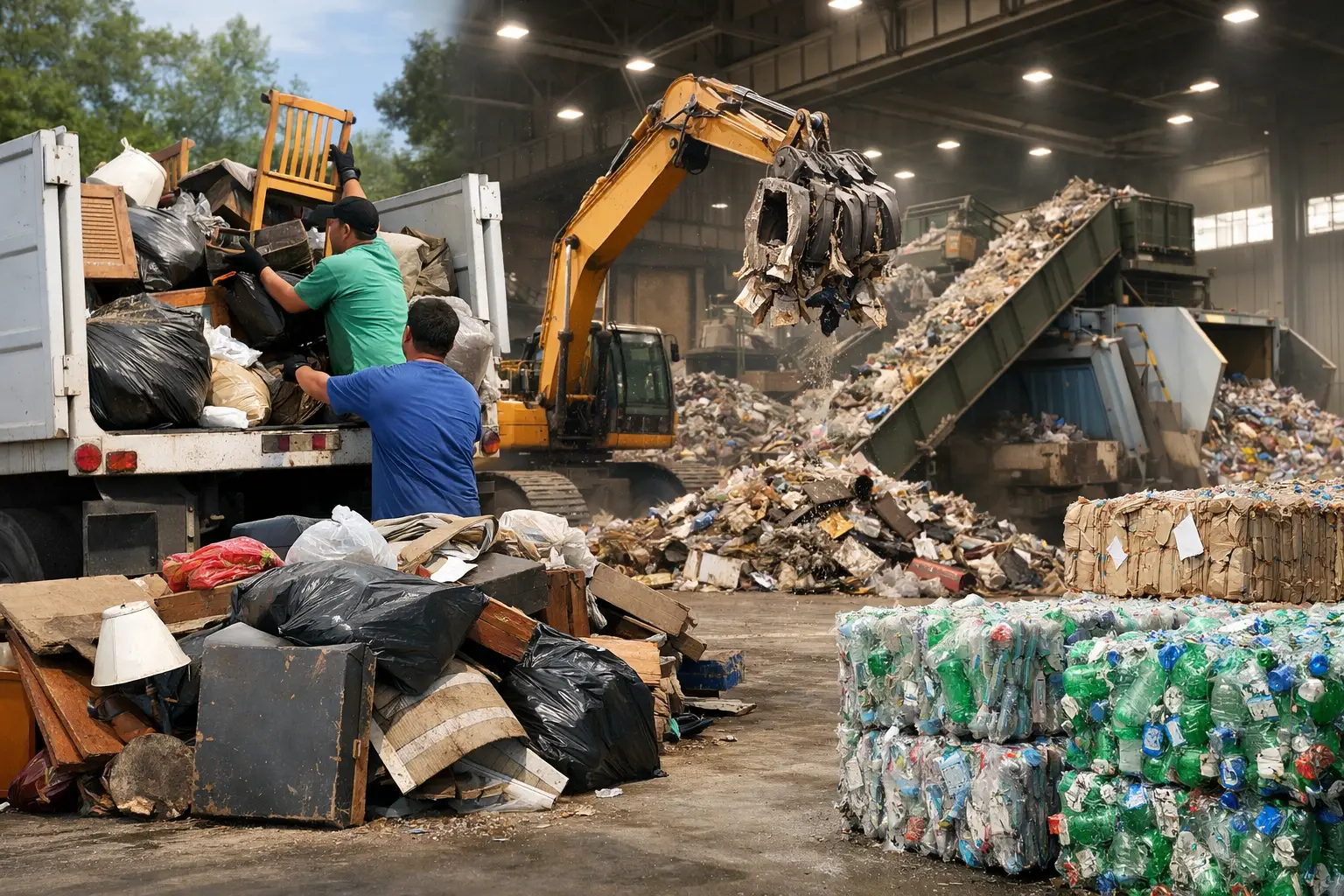
That broken recliner disappears from the living room, the garage finally has a floor again, and the pile from your remodel is no longer staring you down from the driveway. But what happens to hauled junk once the truck pulls away?
The short answer: it goes where it is allowed, accepted, and makes the most sense for the material. A junk load is not one thing. It can contain wood, steel, cardboard, old furniture, drywall, carpet, electronics, appliances, yard waste, and plain old trash - often all in the same stop. Each material has a different next step.
A responsible haul is more than lifting heavy stuff. It means moving it through the right disposal channels without turning your cleanup into somebody else's problem.
What happens to hauled junk at the next stop?
After pickup, the load is taken to an appropriate local facility or transfer point. Depending on what is in the truck, that may mean a recycling operation, a scrap yard, a donation outlet that accepts usable goods, a construction-and-demolition facility, or a landfill.
There is no honest promise that every item gets recycled or donated. Condition matters. Local facility rules matter. Contamination matters. A stained mattress, water-damaged particleboard cabinet, or broken television may have reached the end of its useful life, even if it looked like it might be worth saving from across the room.
Still, hauling junk does not automatically mean tossing everything into one hole in the ground. Loads are evaluated by material type and disposal requirements. The goal is to keep recoverable material in the proper stream when practical, while making sure the rest is handled safely and legally.
First comes sorting - sometimes before pickup
Sorting begins the minute a crew sees the job. Keeping a stack of clean cardboard separate from demolition debris makes recycling more realistic. Setting a working dresser aside from a pile of wet basement debris can make it possible to send that item somewhere useful.
This is also why the stuff you put in one pile affects the whole load. A bag of household chemicals leaking onto furniture or cardboard can change what a facility will accept. Paint, fuels, batteries, propane cylinders, pesticides, and other hazardous materials need special handling and usually should not be mixed into a standard junk pickup or dumpster.
For homeowners, the helpful move is simple: point out anything unusual before the loading starts. A crew can plan around an old freezer, a television, tires, or anything that may carry special disposal rules. Surprises are how a straightforward haul gets complicated.
Where different kinds of junk usually go
The final destination depends on the item, its condition, and what local facilities accept that day. Here is the real-world path for the things that fill up most junk trucks.
Furniture and household clutter
Couches, chairs, tables, mattresses, shelving, and boxes of household goods are often the biggest part of a move-out, estate cleanout, or garage purge. If an item is clean, complete, and still usable, donation or reuse may be an option.
That "if" does a lot of work. Donation centers have limited space and safety standards. Torn upholstery, strong odors, pet damage, mold, bed bugs, missing parts, and unstable frames can make an item unacceptable. In those cases, the material may be broken down where possible or taken for disposal.
Wood furniture is especially mixed. Solid wood pieces may be durable enough for reuse. Pressboard furniture that has swelled from moisture usually is not. The same goes for cheap flat-pack pieces with cracked panels or stripped hardware. They were built for a season, not a second life.
Metal, appliances, and machinery
Metal has value because it can be recovered and processed. Bed frames, grills, filing cabinets, bikes, shelving, exercise equipment, and many appliances may be directed to scrap processing.
Appliances need a closer look. Refrigerators, freezers, air conditioners, and dehumidifiers can contain refrigerants that must be handled correctly before the unit is processed. Washers, dryers, ranges, and water heaters are generally more straightforward because they are largely metal, but condition and local acceptance rules still apply.
If you are clearing an old workshop or barn in the Bowling Green area, keep an eye out for containers with oil, fuel, or unknown liquids. The metal container itself may be recyclable later, but not while it is full of something hazardous.
Construction and renovation debris
A kitchen tear-out is not just "junk." It can include lumber, drywall, shingles, insulation, tile, carpet, cabinets, doors, windows, and packaging. Some of that material can be sorted or processed. Some belongs in a construction-and-demolition waste stream. Some has to be disposed of as regular waste.
Clean loads are easier to manage. A pile of plain lumber is different from lumber nailed to wet carpet, wrapped in insulation, and mixed with food trash. If you are renting a dumpster for a project, ask before loading items that frequently carry restrictions, such as paint, tires, batteries, appliances, or hazardous materials.
Weight matters, too. Concrete, brick, dirt, and roofing material can turn a light-looking dumpster into a very heavy load fast. These materials may need a separate container or specific load limits. That is not busywork. It protects the truck, follows facility rules, and prevents an avoidable surprise on the bill.
Electronics and items with special rules
Old TVs, computer monitors, printers, laptops, cables, and other electronics do not belong in the same category as a busted coffee table. They may contain components that require specialized recycling or disposal.
Batteries are another big one. Loose batteries can create fire risk when crushed or damaged in a truck or at a processing facility. Keep them separate. The same common-sense rule applies to propane tanks, fluorescent bulbs, paints, solvents, pesticides, and medical sharps. When in doubt, say something before the haul begins.
The landfill is part of the answer, not the whole answer
Some junk cannot be repaired, reused, donated, or economically recycled. That is the plain truth. Wet upholstered furniture, contaminated debris, ruined carpet, broken composite materials, and general household trash often end up at a permitted landfill after the proper transfer process.
That does not mean the pickup was pointless. The pile is out of your home, driveway, rental property, or jobsite. It is contained and moved through a regulated waste system rather than dumped in a ditch, burned in a backyard, or left for somebody else to deal with.
The best way to reduce landfill waste starts before a pickup. Sell or give away usable items while they are still clean and functional. Set aside scrap metal. Break down clean cardboard. Use up or properly drop off household chemicals instead of hiding them at the bottom of a junk pile. A little separation can create better options.
Why honest hauling beats wishful recycling
Everybody likes the idea that every old couch gets revived and every board becomes something new. The reality is messier. Recycling takes labor, transportation, processing capacity, and a market for the recovered material. Donation takes storage space and items that another person can actually use.
That is why the right question is not always, "Can this be recycled?" It is, "What is the responsible, permitted destination for this specific item?" Sometimes that is reuse. Sometimes it is metal recovery. Sometimes it is a landfill. What matters is that the answer is based on the material in front of you, not a feel-good guess.
Clear the pile, know the plan
Whether you book a full-service haul or fill a roll-off dumpster on your own schedule, the job does not end when the junk leaves your property. It enters a chain of sorting, processing, recycling, reuse, and disposal built around what the material is and what local facilities can take.
Before you start loading, separate anything hazardous, flag special items, and do not bury a questionable container at the bottom of the pile. Then let the heavy stuff go. A clean space feels even better when you know the mess was sent on its way the right way.