
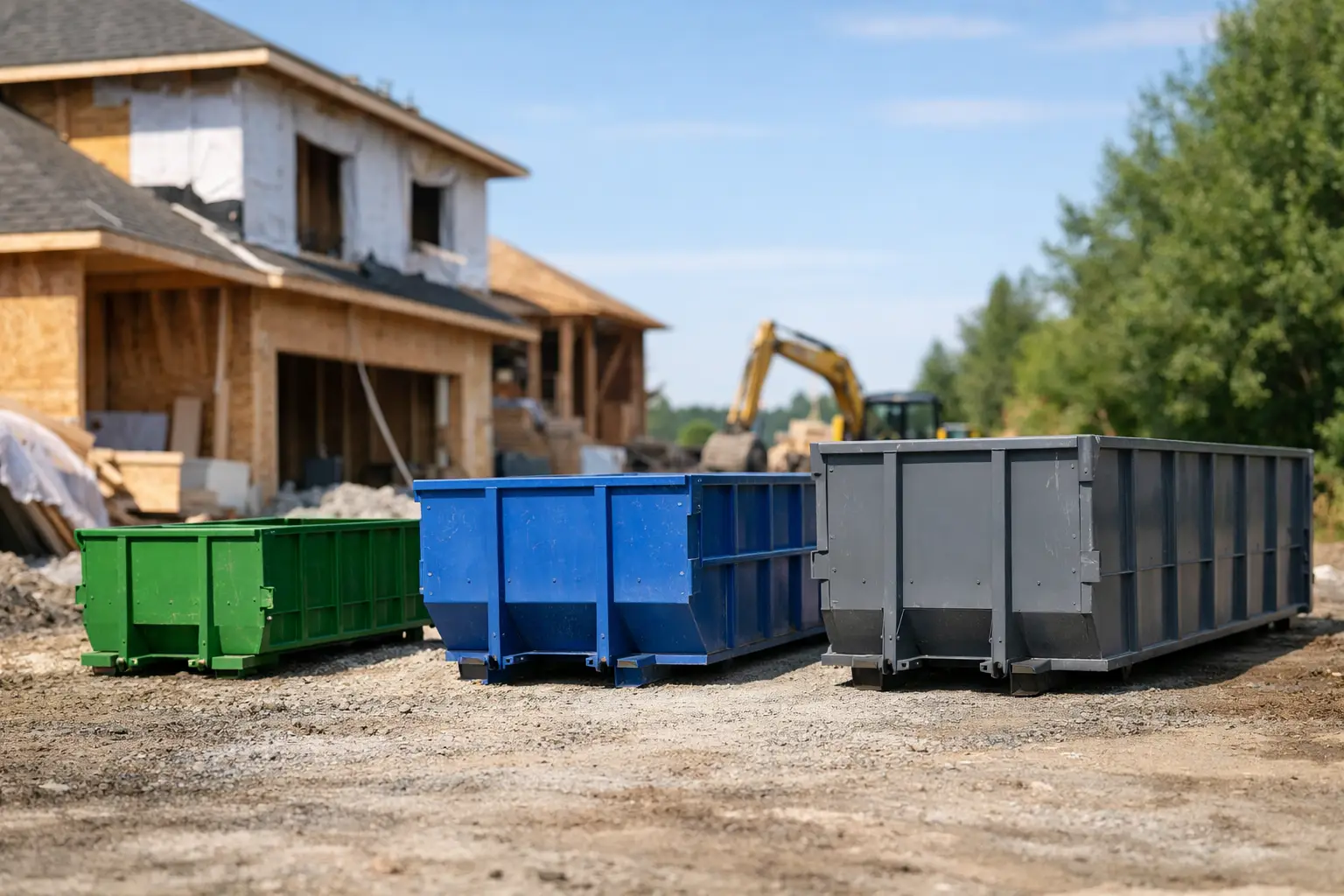
A dumpster that is too small turns a Saturday cleanup into a second rental. One that is wildly too big can take up driveway space you did not need to give up. So, what size dumpster do I need? Start with the pile, not the room it came from. A packed garage can be a 10-yard job. One kitchen remodel can fill a 20-yard container faster than most people expect.
For most home projects, the right answer comes down to three things: how much material you have, how heavy it is, and how much room you have for delivery. Get those three right and the rest is simple: drop it, fill it, and let it go.
What Dumpster Sizes Mean
Dumpster sizes are measured in cubic yards. That is volume, not weight. A 10-yard dumpster holds 10 cubic yards of debris, while a 30-yard dumpster holds three times that volume. The containers are long, open-top roll-offs designed to sit in a driveway or other accessible hard surface.
Exact dimensions can vary by container and truck, but a larger yardage usually means a longer box and taller sides. That matters when you are planning where it will sit, but it also matters when you are loading. A tall 30-yard dumpster is great for bulky, lightweight debris. It is less convenient if you are repeatedly tossing dense material over the side by hand.
Do not choose solely by the amount of empty space you see. A pile of cardboard, old furniture, and bags of clothing takes up room quickly but stays relatively light. Concrete, dirt, shingles, tile, and wet lumber can reach a weight limit long before the dumpster looks full.
The Quick Answer: Which Size Fits Your Job?
The typical choices for a home project are 10, 15, 20, and 30 yards. Here is where each one usually earns its keep.
10-yard dumpster: Small projects with dense debris
A 10-yard dumpster is the compact workhorse. It fits small cleanouts, a bathroom renovation, a shed cleanup, or a modest amount of yard debris. It can also make sense for heavy materials because its smaller volume helps prevent the classic mistake of loading a giant container with concrete until it is too heavy to haul.
Choose a 10-yard size when the job is contained to one room, one small outdoor structure, or a few concentrated piles. If the basement has become a storage museum over 20 years, though, do not assume it is a 10-yard job just because the space itself is small. Packed belongings expand fast once they hit the driveway.
15-yard dumpster: The middle ground for cleanouts
A 15-yard dumpster gives you breathing room without committing to a large container. It is a solid fit for a larger garage cleanup, several rooms of household clutter, flooring removal from a few rooms, or a small deck tear-out.
This size is often the practical choice when you have more than one category of junk - say, furniture, boxes, old shelving, and renovation scraps - but you are not gutting an entire house. If you are on the fence between 10 and 15 yards, the 15-yard option can save you from playing debris Tetris on pickup day.
20-yard dumpster: Remodels and serious decluttering
A 20-yard dumpster is a common choice for major cleanouts and mid-sized renovation projects. Think kitchen or bathroom demolition with cabinets and drywall, flooring removed from much of a house, a large deck, or an estate cleanout that involves more than a few rooms.
It is also a good fit when bulky items are driving the project. Sofas, mattresses, cabinets, broken tables, and bagged trash do not always weigh much, but they eat volume in a hurry. A 20-yard container gives those awkward items somewhere to go without forcing you to stack every piece like a moving crew.
30-yard dumpster: Big volume, lighter material
A 30-yard dumpster is for the jobs that have clearly outgrown the garage. Whole-home cleanouts, larger remodeling projects, move-out debris, demolition wood, and major attic or barn cleanups can all call for this size.
The trade-off is access and weight. You need more space for placement, and you should not plan to fill it with dense materials such as soil, brick, concrete, or shingles unless the rental provider specifically confirms the weight allowance and loading rules. For big, lighter material, though, a 30-yard dumpster keeps the project moving instead of stopping halfway through for another container.
Match the Dumpster to the Material, Not Just the Project
Two projects with the same square footage can need completely different dumpsters. Removing carpet and padding from a house creates bulky but manageable debris. Removing ceramic tile, mortar, and old subfloor can create a heavy load that needs a different plan.
Heavy debris needs a weight-first approach
For concrete, brick, dirt, stone, shingles, plaster, tile, and similar materials, ask about weight limits before choosing a size. A smaller dumpster may be the safer, more cost-conscious choice. In some cases, the best answer is a container loaded only partway or a dedicated heavy-material setup.
Do not bury a few thousand pounds of concrete under a layer of household junk and hope it works out. Mixed loads can be harder to manage, and exceeding the included weight can lead to added disposal charges. Upfront pricing only works when the material is described honestly from the start.
Bulky household junk needs volume
For furniture, boxes, toys, clothes, shelving, mattresses, and general household clutter, volume is usually the bigger issue. Break down cardboard, remove table legs when practical, and load flat items along the walls. You will get more out of the container without turning loading into an engineering project.
If the cleanup includes appliances, electronics, paint, chemicals, batteries, or tires, ask what is accepted before loading. Those items can require separate handling. The same goes for anything you suspect may be hazardous. A dumpster is built for getting rid of the mess, not for guessing at disposal rules.
Check Your Driveway Before You Book
The dumpster has to get to the job before it can help the job. Measure the area where you want it placed and make sure the delivery truck has a clear path. Cars, low branches, basketball hoops, tight turns, and overhead wires can all complicate a drop-off.
A driveway is usually the easiest placement spot because it is close to the work and gives you a firm loading surface. If you are concerned about scuffs, ask about placing boards under the container. Move vehicles before delivery, leave room around the drop zone, and keep the approach clear through pickup day.
Street placement can involve local rules or permits, so confirm that before the dumpster arrives. This is especially worth checking in neighborhoods with narrow streets or limited parking.
Give Yourself a Little Margin
The cheapest-looking size is not always the least expensive outcome. If you choose a container that is too small, you may need a second haul. If debris sticks above the top rail, it may need to be rearranged or removed before the truck can safely transport it.
A good rule is to choose the next size up when you have not started demolition, when the pile includes bulky furniture, or when you are cleaning out a long-ignored attic, basement, or outbuilding. Hidden piles have a way of appearing after the first pile is gone.
That said, bigger is not automatically better. Choose a smaller size for very dense debris, a tight driveway, or a project with a known, limited scope. The goal is enough capacity to finish the job cleanly, not an oversized container you cannot load efficiently.
When a Dumpster Is Not the Best Fit
A roll-off dumpster works best when you want to work on your own schedule. You load as you sort, renovate, or clean, then schedule pickup when the job is done. It is a good lane for DIY projects, rental turnovers, and cleanouts that take more than a few hours.
But if you have a few heavy items, no time to load, or a mess that needs to disappear fast, full-service junk removal may make more sense. A crew does the lifting, loading, and hauling. No driveway container. No weekend spent wrestling a sleeper sofa down the stairs.
For projects around Bowling Green and Northwest Ohio, Bye-Bye Buckeye can help you narrow the choice down quickly. Describe what you are tossing, mention any heavy material, and be honest about the size of the pile. The right dumpster is the one that lets you finish the work once, close the lid on the mess, and get your space back.